一汁三菜
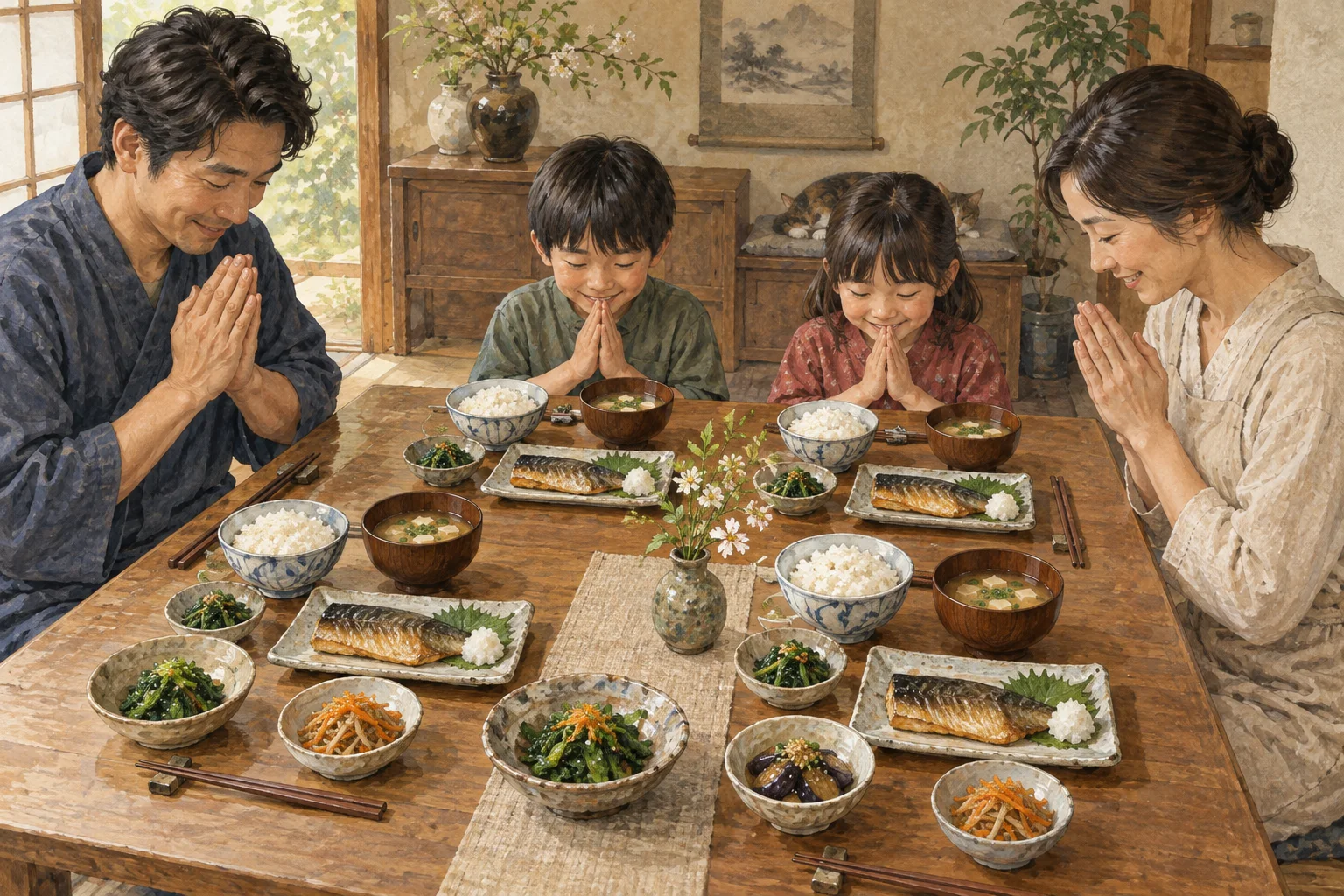
壱In one line一言で言うと
Ichiju sansai means one soup and three dishes, the standard shape of a Japanese meal.
弐In 30 seconds30秒で説明する
A Japanese meal is counted by what accompanies the rice. Ichiju sansai means one soup and three side dishes: usually a main of fish or meat and two smaller dishes such as simmered or dressed vegetables. Rice is not counted because it is assumed, and pickles usually come on the side without being counted. The form comes from medieval temple and samurai dining and is still the model taught in schools.
参As a short speechスピーチ・英作文
If you want one idea that explains how a Japanese meal is built, it is ichiju sansai: one soup, three dishes. The counting is the interesting part. Rice is not one of the three, because rice is the meal itself and everything else is what goes with it, which is also why the word for side dish, okazu, is thought to come from kazu, a word for counting out an assortment.
So a standard tray has rice in front on the left, soup in front on the right, a main dish behind them, and two smaller dishes, often something simmered and something dressed, with pickles added on the side and not counted.
The form came out of temple and samurai dining in the medieval period and was carried into ordinary households, and it is still what home economics classes teach and what a set meal in a restaurant delivers. The practical value of it, for a cook, is that it forces variety: three separate dishes cooked three different ways, rather than one large plate.
一汁三菜いちじゅうさんさいichiju sansaione soup and three dishes, the standard shape of a Japanese meal
主食は数に入らない。ご飯と汁のほかに、おかずが三つという意味。
壱一言で言うとIn one line
一汁三菜とは、汁物一つとおかず三つという、日本の食事の基本の形です。
弐30秒で説明するIn 30 seconds
日本の食事は、ご飯に何が添うかで数えます。一汁三菜とは、汁物一つとおかず三つのこと。多くは魚か肉の主菜と、煮物や和え物などの副菜二つです。ご飯は数えません。あるのが前提だからです。漬物も添えますが、ふつう数には入れません。この形は中世の寺と武家の食事に由来し、いまも学校で教える型です。
参スピーチ・英作文As a short speech
日本の食事の組み立てを一つの考えで説明するなら、一汁三菜です。汁が一つ、菜が三つ。面白いのは数え方です。ご飯は三つに入りません。ご飯こそが食事そのもので、ほかはそれに添うものだからです。
おかずという語が「数(かず)を取りそろえる」ことに由来するとされるのも同じ理屈です。基本の膳は、手前の左にご飯、手前の右に汁、その奥に主菜、そして小さな二皿。煮物と和え物であることが多く、漬物は数に入れずに添えます。
この形は中世の寺と武家の食事から生まれ、家庭に受け継がれました。いまも家庭科で教える型であり、店の定食が出してくるものでもあります。作る側にとっての値打ちは、変化を強いることです。大皿一つではなく、三つ別々に、三通りの調理で作ることになります。
こう聞かれたらQuestions people actually ask
QWhy isn't the rice counted?
ABecause rice is the meal and the dishes are what accompany it. The word okazu means the things added to it, so counting rice among them would be counting the meal against itself.
どうしてご飯は数に入らないのですか。ご飯が食事そのもので、菜はそれに添うものだからです。おかずは「添えるもの」を意味するので、ご飯を数に入れるのは筋が通りません。
QDo families actually eat this way?
ALess strictly than the model suggests. A weekday dinner is often one main dish, rice and soup. The form survives best in set meals at restaurants, in school lunches and in inn breakfasts.
家庭で本当にこの形で食べているのですか。型どおりではありません。平日の夕食は主菜一つとご飯と汁、ということが多いです。形がよく残っているのは、店の定食、給食、旅館の朝食です。
QIs there a bigger version?
AYes: ichiju nisai with two dishes for a plainer meal, and niju gosai, two soups and five dishes, or more for formal occasions. Temple cuisine often uses one soup and one dish, which is the austere end of the same idea.
もっと品数の多い形もあるのですか。あります。簡素なら一汁二菜、改まった席では二汁五菜などになります。精進料理では一汁一菜のこともあり、同じ考え方のいちばん質素な端です。
誤解されやすいA common misunderstanding
MYTHIchiju sansai means four dishes including the rice.一汁三菜は、ご飯を含めて四品という意味だ、と思われがちです。
FACTRice is assumed and not counted. The three are the side dishes that accompany it, in addition to the soup.ご飯は前提であって、数に入りません。三つは、汁のほかにご飯に添える菜のことです。
そのまま使えるフレーズPhrases you can use
- One soup and three dishes, not counting the rice.ご飯を除いて、汁一つと菜が三つです。
- Rice goes front left, soup front right.ご飯は手前の左、汁は手前の右です。
- The word okazu means what you add to rice.おかずとは、ご飯に添えるもののことです。
- It forces variety — three dishes cooked three ways.三品を三通りに作るので、変化がつきます。
- A set meal at a restaurant follows this shape.店の定食は、この形に沿っています。
豆知識Background
一汁三菜は、室町時代に武家の饗応の形として整えられた本膳料理の流れをくむとされ、のちに懐石や会席にも受け継がれた。「菜」は副食を指す古い語で、「おかず」の語源は「数を取り合わせる」意の「数(かず)」に丁寧の「お」が付いたものとする説が有力である。配膳は、ご飯を左手前、汁を右手前、主菜を右奥、副菜を左奥、香の物を中央奥に置くのが基本とされる。2013年に「和食」がユネスコ無形文化遺産に登録されたのを機に、農林水産省などの説明でも、一汁三菜を基本とする構成が和食の特徴としてよく挙げられている。
出典日本文化ナビ(原田英語.com)「一汁三菜を英語で説明する(ichiju sansai)」https://www.haradaeigo.com/japanese-culture/en/ichiju-sansai
- 文
- 日本文化ナビ編集部(原田英語.com)— 英文・和訳・解説はすべて独自に作成
- イラスト
- 日本文化ナビ オリジナル
- 発行
- 原田英語.com https://www.haradaeigo.com/
- 印刷日
- 2026.10.17
© 2026 Harada Eigo (原田英語.com). Text and illustration: Japan Culture Navi.
ページはこちら