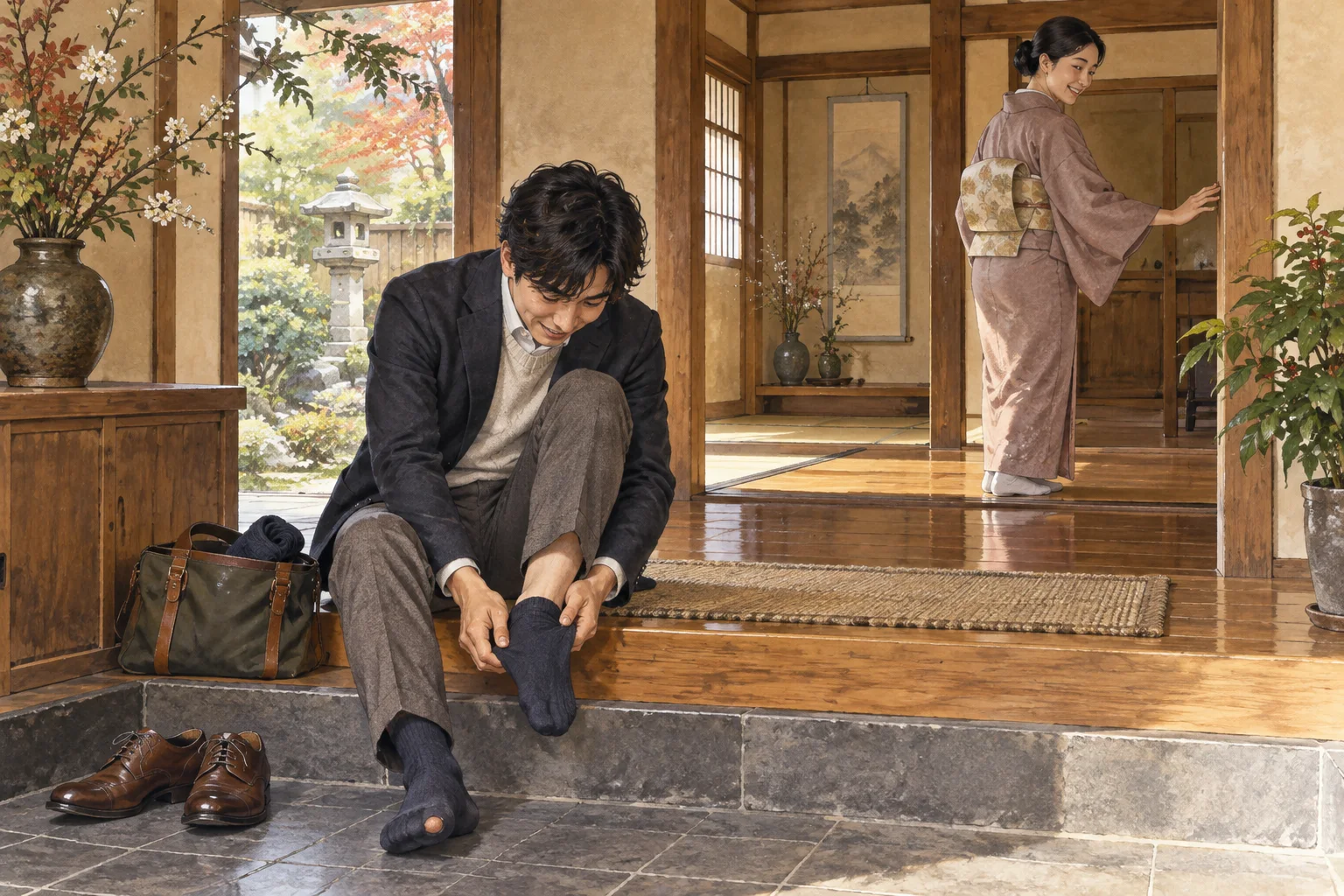
靴下に穴
壱In one line一言で言うと
You take your shoes off often in Japan, so the state of your socks is genuinely visible.
弐In 30 seconds30秒で説明する
Shoes come off at homes, many restaurants, temples, clinics, fitting rooms and some workplaces, often without warning. That makes socks a visible garment rather than an invisible one. Bring more pairs than you think you need, avoid holes, and remember that bare feet in someone's home are less welcome than socks.
参As a short speechスピーチ・英作文
This sounds trivial and it is one of the most practically useful things to tell a visitor. In Japan you will take your shoes off far more often than you expect, and usually without warning: entering a home, obviously, but also a great many restaurants with raised floors or sunken seating, temple buildings, clinics, some schools and offices, fitting rooms in clothing shops, and sometimes a meeting room.
Because of that, socks function as a visible garment. A hole in the toe that nobody would ever see in another country is on display here, and Japanese people are quietly aware of this in a way that produces a genuine small panic when it happens.
Practical advice: bring more pairs than you think you need, check them before going out, and prefer socks over bare feet if you are visiting a home, because bare feet on someone's floor reads as less clean. If you are wearing sandals, carrying a spare pair of socks is common and sensible.
靴下に穴くつしたにあなkutsushita ni anawhy this matters more here
靴を脱ぐ機会が多い国では、靴下は見える服の一部になる。
壱一言で言うとIn one line
日本では靴を脱ぐ機会が多いので、靴下の状態が実際に人目に触れます。
弐30秒で説明するIn 30 seconds
家、多くの飲食店、寺、診療所、試着室、一部の職場で靴を脱ぎます。しかも予告なくそうなります。そのため靴下は見えない衣服ではなく、見える衣服になります。思うより多めに持ってきて、穴を開けず、そして人の家では素足より靴下のほうが歓迎されることを覚えておいてください。
参スピーチ・英作文As a short speech
些細に聞こえますが、訪れる人に伝えて最も実際に役立つことのひとつです。日本では思っているよりずっと頻繁に靴を脱ぎます。しかもたいてい予告なくです。家に上がるときはもちろんですが、床を上げた席や掘りごたつの飲食店は非常に多く、寺の堂、診療所、一部の学校や職場、衣料品店の試着室、ときには会議室でもそうなります。
そのため靴下は見える衣服として働きます。よその国なら誰の目にも触れないつま先の穴が、ここでは人目にさらされます。日本人はそのことを静かに意識していて、実際にそうなったときには小さいながら本物の動揺が起きます。実際的な助言を。
思うより多めに持ってきて、出かける前に確かめること。人の家を訪ねるなら素足より靴下を選ぶこと。人の家の床に素足は、清潔でないと読まれるからです。サンダルを履くなら、替えの靴下を持ち歩くのはよくあることで、理にかなっています。
こう聞かれたらQuestions people actually ask
QIs it rude to be barefoot in someone's home?
AIt is not an offense but it is noticed, and socks are the safer choice. In summer with sandals some Japanese people carry a pair to put on before going inside, which tells you how the situation is viewed.
人の家で素足はいけませんか。咎められることではありませんが、気づかれます。靴下のほうが無難です。夏にサンダルを履く日本人の中には、上がる前に履く靴下を持ち歩く人もいます。この状況がどう見られているかが、それでよく分かります。
QWhat about tights or bare feet in a restaurant?
ATights are fine. Bare feet on tatami in a restaurant are tolerated but not ideal, and some traditional restaurants and tea rooms explicitly ask for socks or provide disposable ones at the entrance.
飲食店でストッキングや素足はどうですか。ストッキングなら問題ありません。飲食店の畳に素足は、許容はされますが望ましくはなく、料亭や茶室では靴下を求める、あるいは入口で使い捨てのものを用意している店もあります。
そのまま使えるフレーズPhrases you can use
- You take your shoes off a lot here.日本では靴を脱ぐ機会が多いです。
- Bring more socks than you think.靴下は多めに持ってきてください。
- Socks are better than bare feet indoors.室内では素足より靴下がいいです。
- Some places lend you a pair.貸してくれる店もあります。
豆知識Background
靴を脱ぐ習慣は、床に座り、床で寝る暮らし方と結びついています。玄関で靴を脱ぎ、揃えて向きを変えて置くのが作法です。旅館や料亭では、靴を脱ぐ場所に係の人が控えていることもあります。茶室では白い靴下や足袋に履き替えるのが作法とされることが多く、使い捨ての足袋を用意する施設もあります。試着室に「土足禁止」の表示があるのも同じ理由です。
出典日本文化ナビ(原田英語.com)「靴下に穴を英語で説明する(kutsushita ni ana)」https://www.haradaeigo.com/japanese-culture/en/holes-in-your-socks
- 文
- 日本文化ナビ編集部(原田英語.com)— 英文・和訳・解説はすべて独自に作成
- イラスト
- 日本文化ナビ オリジナル
- 発行
- 原田英語.com https://www.haradaeigo.com/
- 印刷日
- 2026.10.17
© 2026 Harada Eigo (原田英語.com). Text and illustration: Japan Culture Navi.
ページはこちら