潜伏キリシタン
壱In one line一言で言うと
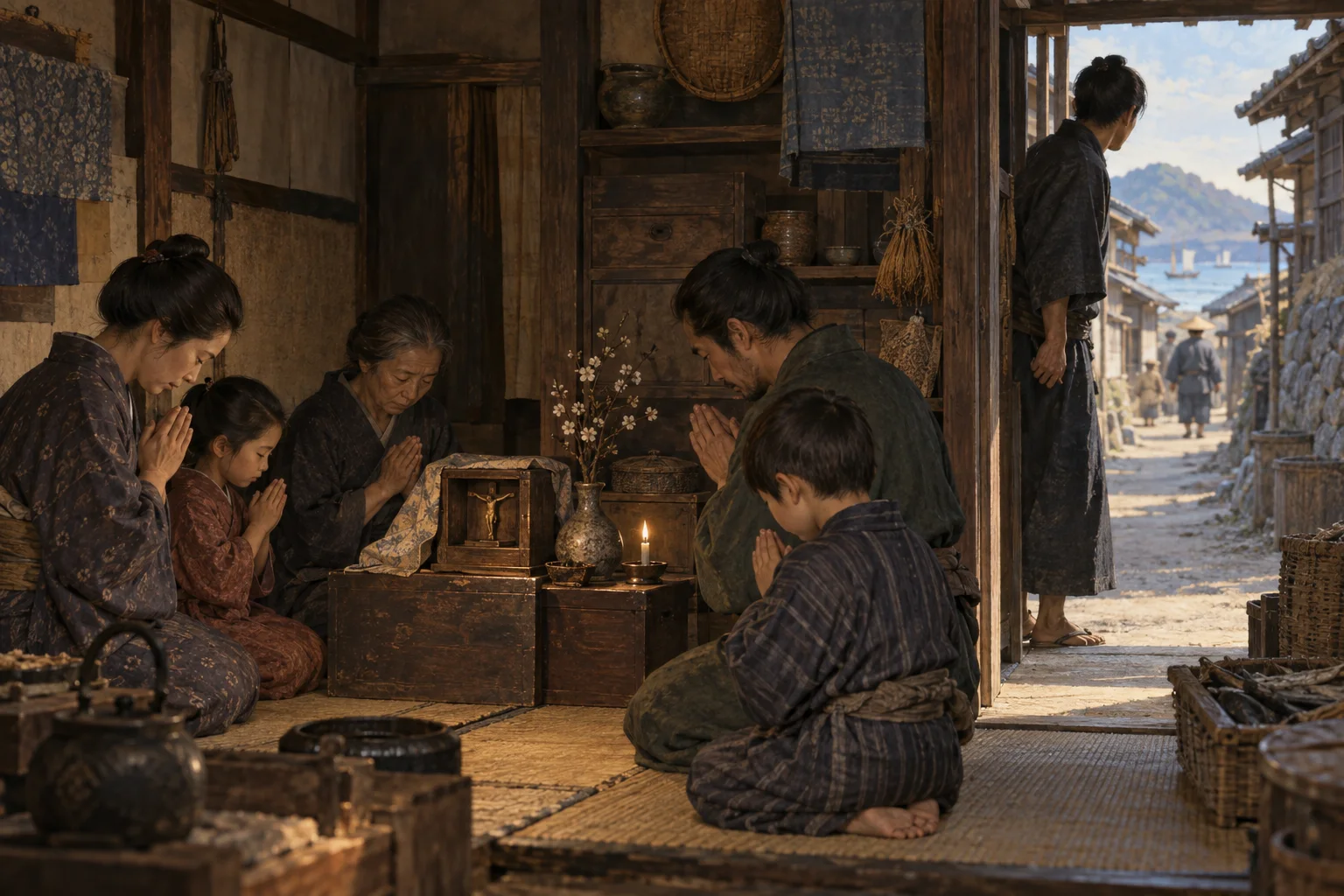
Senpuku kirishitan, or hidden Christians, are believers who practiced in secret through the 250-year ban, without priests or churches.
弐In 30 seconds30秒で説明する
Christianity arrived in 1549, was banned from 1614, and was punished severely. In Kyushu, particularly around Nagasaki and the Goto islands, communities kept practicing in secret for about 250 years, disguising devotion inside Buddhist and folk forms, with lay leaders instead of priests. When the ban was lifted in 1873 some rejoined the Catholic Church and others did not. World Heritage sites relating to them were listed in 2018.
参As a short speechスピーチ・英作文
Christianity reached Japan in 1549 and grew quickly, then the government banned it in 1614 and enforced the ban for two and a half centuries with executions, forced renunciation and the fumie, a bronze image of Christ or the Virgin Mary that suspects were made to step on. Remarkably, in parts of Kyushu the faith did not die.
Without priests, without churches and without printed scripture, communities kept it going through memorized prayers passed down by voice, lay officials who baptized and kept the calendar, and objects that could pass inspection: a statue of the Buddhist figure Kannon holding a child, treated as the Virgin Mary. Over two hundred and fifty years the practice drifted, and the prayers came to include Latin and Portuguese words that nobody could translate any more.
When the ban was lifted in 1873, some of these communities made themselves known and returned to the Catholic Church, while others chose to continue what their ancestors had handed down, and their descendants are the ones properly called kakure kirishitan today. The sites connected with the period were added to the World Heritage list in 2018.
潜伏キリシタンせんぷくきりしたんsenpuku kirishitanthe Christians who kept the faith through 250 years of prohibition
禁教の二百五十年を、司祭なしで伝えた人たち。観音像をマリアに見立てた。
壱一言で言うとIn one line
潜伏キリシタンとは、二百五十年の禁教のあいだ、司祭も教会もないまま、ひそかに信仰を守った人たちです。
弐30秒で説明するIn 30 seconds
キリスト教は1549年に伝わり、1614年から禁じられ、厳しく罰せられました。九州、とりわけ長崎や五島の地域では、およそ二百五十年にわたって信仰がひそかに守られます。仏教や民間の形に紛れさせ、司祭のかわりに信徒の役職者が伝えました。1873年に禁教が解かれると、カトリック教会に戻った人もいれば、戻らなかった人もいます。関係する遺産は2018年に世界遺産に登録されました。
参スピーチ・英作文As a short speech
キリスト教は1549年に日本へ伝わって急速に広がり、1614年に幕府が禁じ、その禁制は二世紀半にわたって、処刑、強いられた棄教、そして踏絵によって保たれました。踏絵は、疑われた者に踏ませる、キリストやマリアを刻んだ青銅の像です。驚くべきなのは、九州の一部で信仰が絶えなかったことです。
司祭も教会も印刷された聖書もないまま、共同体は口伝えで覚えた祈りと、洗礼を授け暦を守る信徒の役職者、そして調べに通る品によって、これを守りました。子を抱く観音像をマリアとして拝む、というような品です。二百五十年のあいだに形は移ろい、祈りの言葉には、もう誰にも訳せないラテン語やポルトガル語が混ざるようになりました。
1873年に禁が解かれると、名乗り出てカトリック教会に戻った共同体もあれば、先祖が伝えたものをそのまま続けることを選んだ人たちもいます。その子孫が、今日いう意味での「かくれキリシタン」です。この時代に関わる遺産は2018年に世界遺産に登録されました。
こう聞かれたらQuestions people actually ask
QWhy was Christianity banned?
AThe rulers saw it as a loyalty that stood outside their own authority and as tied to European powers. Explanations given by historians vary in emphasis, and trade policy was part of it.
どうして禁じられたのですか。為政者は、自らの支配の外にある忠誠であり、ヨーロッパ諸国と結びついたものと見ました。歴史家の説明は重点が分かれますし、貿易政策も絡んでいました。
QWhat is the difference between senpuku and kakure?
ASenpuku describes those who practiced secretly during the ban. Kakure is now used for those who, after the ban ended, kept their inherited form rather than joining the Catholic Church.
潜伏キリシタンとかくれキリシタンはどう違うのですか。潜伏キリシタンは、禁教の間にひそかに信仰した人たちを指します。かくれキリシタンは、禁が解けたあとも教会に入らず、受け継いだ形を守り続けた人たちを指すのが今の使い方です。
QAre there still practitioners?
AA small number, mainly in the Nagasaki area, and the number is falling as the communities age. Some groups have formally ended their observances in recent decades.
いまも信仰している人はいますか。長崎の一部にわずかに残っていますが、高齢化で減り続けています。近年、行事を正式に終えた集まりもあります。
誤解されやすいA common misunderstanding
MYTHThe hidden Christians simply practiced Catholicism in secret.潜伏キリシタンは、カトリックをそのまま隠れて続けていた、と思われがちです。
FACTOver 250 years without clergy the practice changed, absorbing Buddhist and folk elements, and prayers survived as sounds whose meaning had been lost.聖職者のいない二百五十年のあいだに形は変わり、仏教や民間の要素を取り込み、祈りは意味の分からない音として残りました。
そのまま使えるフレーズPhrases you can use
- Christianity was banned for about 250 years.キリスト教は二百五十年ほど禁じられていました。
- They had no priests and no churches.司祭も教会もありませんでした。
- Prayers were passed down by voice alone.祈りは口伝えだけで受け継がれました。
- A Kannon statue stood in for the Virgin Mary.観音像をマリアに見立てました。
- Suspects were made to step on a bronze image.疑われた者は青銅の像を踏まされました。
豆知識Background
キリスト教は1549年にフランシスコ・ザビエルが鹿児島に上陸して伝えられ、1614年の禁教令で全国的に禁じられた。1865年、長崎の大浦天主堂で浦上の信徒が神父に信仰を明かした出来事は「信徒発見」と呼ばれる。禁教が実際に解かれたのは1873年(明治6年)で、キリシタン禁制の高札が撤去された。2018年、「長崎と天草地方の潜伏キリシタン関連遺産」として12の資産がユネスコ世界遺産に登録された。
出典日本文化ナビ(原田英語.com)「潜伏キリシタンを英語で説明する(senpuku kirishitan)」https://www.haradaeigo.com/japanese-culture/en/hidden-christians
- 文
- 日本文化ナビ編集部(原田英語.com)— 英文・和訳・解説はすべて独自に作成
- イラスト
- 日本文化ナビ オリジナル
- 発行
- 原田英語.com https://www.haradaeigo.com/
- 印刷日
- 2026.10.17
© 2026 Harada Eigo (原田英語.com). Text and illustration: Japan Culture Navi.
ページはこちら