源泉かけ流し
壱In one line一言で言うと
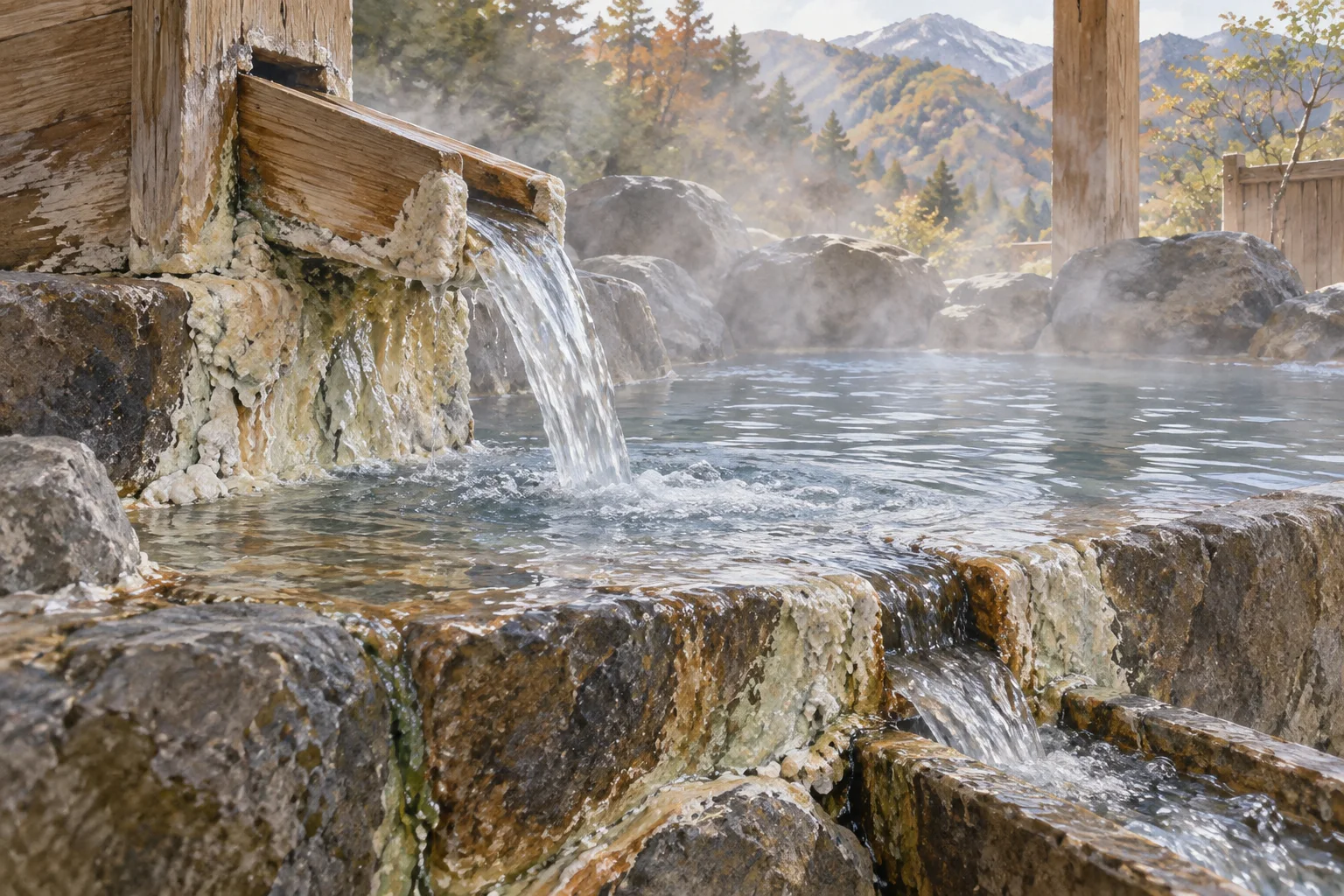
Gensen kakenagashi means spring water flows in, overflows out, and is never recirculated.
弐In 30 seconds30秒で説明する
In a kakenagashi bath, water from the spring runs continuously into the tub and the overflow goes down the drain. The alternative is recirculation, where water is filtered, disinfected and pumped back. Neither is dishonest, but the terms are used loosely: even gensen kakenagashi promises only that nothing is recirculated, not that no water was added or heated.
参As a short speechスピーチ・英作文
If you spend any time in Japanese hot springs you will see the phrase kakenagashi on signs, and it is worth knowing what it claims. In a kakenagashi bath, water arrives from the source, fills the tub and runs over the edge, and that overflow is not reused.
The alternative is a recirculating system, where the same water is filtered, chlorinated and pumped back, which uses far less of a limited resource and is common where the flow is small. Many people read gensen kakenagashi as meaning the water reaches you exactly as it comes out of the ground, but strictly it promises only that nothing is recirculated; some places still add a little water or heat it.
Many springs come out at over fifty degrees, so some cooling is necessary, and an honest inn will say how it does that. Every facility is required to post a notice giving the source, the temperature and whether water is added, heated, recirculated or disinfected. Read it. It is usually next to the changing room door.
源泉かけ流しげんせんかけながしgensen kakenagashihot spring water used once and let overflow, with nothing recirculated
浴槽から湯があふれているか。見れば、たいてい分かる。
壱一言で言うとIn one line
源泉かけ流しとは、源泉が注がれ、あふれた湯は捨てられ、一度も循環させない方式です。
弐30秒で説明するIn 30 seconds
かけ流しの浴槽では、源泉が絶えず注がれ、あふれた分はそのまま流れ去ります。対するのが循環で、湯を濾過し消毒して戻す方式です。どちらが不誠実ということはありませんが、言葉は緩く使われがちです。「源泉かけ流し」でさえ、約束しているのは循環させないことであり、加水や加温がないことまでは意味しません。
参スピーチ・英作文As a short speech
日本の温泉を少しでも巡ると「かけ流し」という言葉を看板で見ます。それが何を主張しているのかを知っておく価値があります。かけ流しの浴槽では、湯が源泉から届き、槽を満たし、縁からあふれます。そのあふれた湯は再利用されません。対するのが循環方式で、同じ湯を濾過し、塩素で消毒し、また戻します。
限られた資源の使用量ははるかに少なく、湧出量の少ない所では一般的です。「源泉かけ流し」は、地面から出たままの湯が届くことだと受け取られがちですが、厳密に約束しているのは循環させないことだけで、少し加水したり加温したりする所もあります。
50度を超えて湧く源泉も多く、冷ます工夫は必要です。誠実な宿は、その方法を明かします。どの施設にも、源泉、温度、加水・加温・循環・消毒の有無を掲示する義務があります。読んでください。たいてい脱衣所の入口の横に貼ってあります。
こう聞かれたらQuestions people actually ask
QHow can I tell just by looking?
ALook at the edge of the tub. If water is genuinely running over the rim and away, that is a good sign. Also look for the posted notice, which is required and states exactly what is done to the water.
見ただけで分かりますか。浴槽の縁を見てください。湯が本当に縁を越えて流れ去っていれば、良い目印です。掲示も見てください。義務づけられていて、湯に何をしているかが正確に書かれています。
QIs recirculated water bad?
ANot in itself. It is a hygiene and resource decision, and disinfection exists because of past outbreaks of legionella. What matters is that the facility says what it does rather than implying otherwise.
循環の湯は悪いのですか。それ自体が悪いのではありません。衛生と資源をめぐる判断で、消毒はレジオネラ菌の事故があったために行われています。大事なのは、していることを施設がきちんと書いているかどうかです。
QWhy is some water diluted?
ABecause many springs emerge above fifty degrees and would scald. Cooling by adding water is the simplest method; cooling by running the water through pipes or channels keeps it undiluted, and inns that do that usually advertise it.
どうして加水する所があるのですか。50度を超えて湧く源泉が多く、そのままでは入れないからです。水を足すのがいちばん簡単ですが、管や樋を通して冷ませば薄まりません。それをしている宿は、たいてい宣伝しています。
誤解されやすいA common misunderstanding
MYTHKakenagashi always means the water is untouched.かけ流しなら湯に手を加えていない、と思われがちです。
FACTKakenagashi only means the water is not recirculated. It may still be diluted or reheated, even under the name gensen kakenagashi. The posted notice is what tells you.かけ流しが意味するのは、湯を循環させていないことだけです。「源泉かけ流し」と名乗っていても、加水や加温はありえます。実際のところは掲示に書かれています。
そのまま使えるフレーズPhrases you can use
- The water flows in and overflows — nothing is reused.湯は注がれてあふれ、再利用されません。
- Recirculated water is filtered and disinfected.循環の湯は濾過して消毒しています。
- Check the notice by the changing room.脱衣所の掲示を見てください。
- Some springs come out over fifty degrees.50度を超えて湧く源泉もあります。
- Even gensen kakenagashi may have a little water added.源泉かけ流しでも、少し加水していることがあります。
豆知識Background
温泉法により、温泉を利用する施設は、源泉名、泉質、温度、加水・加温・循環ろ過・消毒の有無などを掲示することが義務づけられている。「かけ流し」そのものには法律上の定義がない。公正取引委員会の考え方では、加水・加温・循環・ろ過のいずれも行わない場合にのみ使える表示は「源泉100%」などであり、「源泉かけ流し」は循環させないことを示す言い方で、温度調整のための加水や加温を伴う場合もある。循環方式が広まった背景には湧出量の限界や浴槽の大型化があり、一方で2002年に宮崎県で起きたレジオネラ菌による集団感染などを受けて、循環させる湯の消毒が厳しく求められるようになった。湯が縁からあふれていても、いったん回収して戻している場合があるため、掲示を読むのが確実である。
出典日本文化ナビ(原田英語.com)「源泉かけ流しを英語で説明する(gensen kakenagashi)」https://www.haradaeigo.com/japanese-culture/en/gensen-kakenagashi
- 文
- 日本文化ナビ編集部(原田英語.com)— 英文・和訳・解説はすべて独自に作成
- イラスト
- 日本文化ナビ オリジナル
- 発行
- 原田英語.com https://www.haradaeigo.com/
- 印刷日
- 2026.10.17
© 2026 Harada Eigo (原田英語.com). Text and illustration: Japan Culture Navi.
ページはこちら