ふりかけ
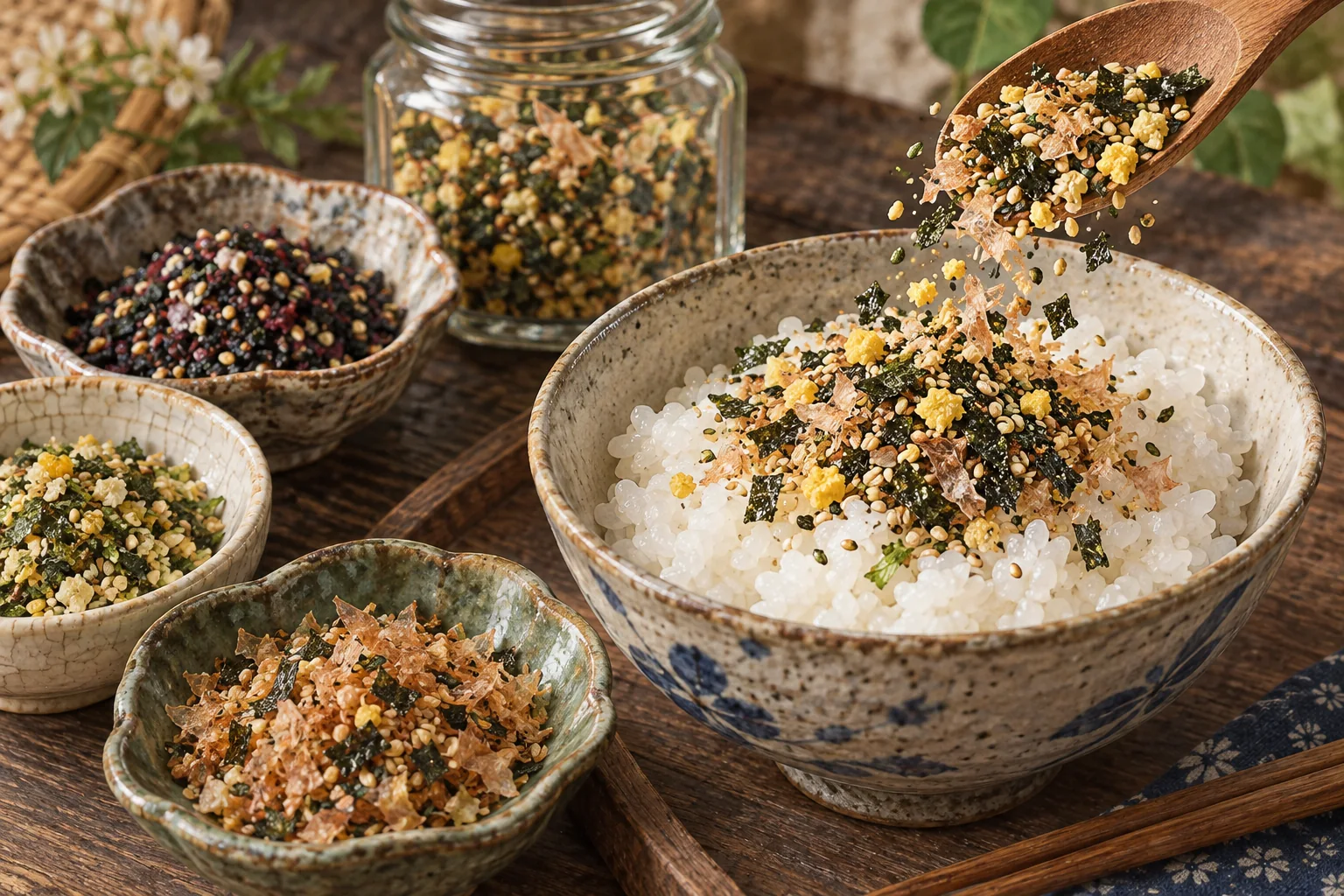
壱In one line一言で言うと
Furikake is a dry, seasoned sprinkle of seaweed, fish and sesame shaken over plain rice to add flavor fast.
弐In 30 seconds30秒で説明する
Furikake is a dry mix, usually built from some combination of dried fish flakes, seaweed, sesame seeds and salt, sprinkled straight onto a bowl of plain white rice. It turns rice into a quick meal or a simple side without any cooking, and comes in hundreds of flavors sold in small packets in every supermarket. It is said to have started in the early twentieth century as a way to get more calcium into people's diets using ground fish bone.
参As a short speechスピーチ・英作文
Furikake is one of the simplest ways to see how practical Japanese home cooking can get: a dry seasoning you shake straight onto rice, no bowl, no heat, no skill required. The classic mix includes dried bonito or other fish flakes, dried seaweed, sesame seeds and salt, though modern versions range from mild egg-flavored blends aimed at children to spicy, wasabi or plum varieties for adults.
The origin story usually told is that a pharmacist in Kumamoto, worried about calcium deficiency in the local diet in the early twentieth century, ground dried fish bones into a fine powder and mixed it with seasoning to make it palatable sprinkled over rice, and sold it under the name gohan no tomo, a friend for your rice. Whether or not every detail of that story is exact, the basic logic still explains why furikake exists: it is a cheap, shelf-stable way to add a little nutrition and make a bowl of plain rice interesting, and it remains a lunchbox staple, especially for children who might otherwise leave the rice untouched.
ふりかけふりかけfurikakea dry seasoning sprinkled over rice
もとはカルシウム不足を補うため、魚の骨を粉にしてご飯にかけたのが始まりとされる。
壱一言で言うとIn one line
ふりかけとは、海苔や魚、ごまなどを混ぜた乾燥調味料で、ご飯にかけるだけですぐ味がつきます。
弐30秒で説明するIn 30 seconds
ふりかけは、干した魚のそぼろ、海苔、ごま、塩などを組み合わせた乾燥調味料で、白いご飯にそのままかけて使います。調理せずにご飯を手早い一食や簡単な一品に変えるもので、スーパーには何百種類もの小袋入りが並んでいます。大正時代初期、魚の骨を粉にしてカルシウムを補おうとしたのが始まりとされます。
参スピーチ・英作文As a short speech
ふりかけは、日本の家庭料理がどれほど実際的になり得るかを示す、最も分かりやすい例の一つです。ご飯にそのまま振りかける乾燥調味料で、器も火も特別な技術も要りません。定番の中身は、鰹節などの魚のそぼろ、乾燥した海苔、ごま、塩ですが、今では子ども向けの卵風味のような優しい味から、わさびや梅など大人向けの刺激のあるものまで幅広くあります。
よく語られる由来では、大正時代初期、熊本のある薬剤師が地元の食生活のカルシウム不足を案じ、魚の骨を細かい粉にして、ご飯にかけて食べやすいように味付けし、「御飯の友」という名で売り出したとされます。
この逸話の細部がすべて正確かどうかはともかく、その基本の発想は、ふりかけがなぜ存在するのかをよく説明しています。安く、日持ちがし、少し栄養を足しながら、白いご飯を手軽においしくする方法だということです。今も弁当の定番であり、放っておけばご飯を残しかねない子どもにはとくに重宝されています。
こう聞かれたらQuestions people actually ask
QIs furikake healthy?
AIt's generally low in calories but can be fairly high in salt, so it's meant as a light topping rather than something eaten by the spoonful. Some varieties are marketed specifically for their calcium or protein content.
ふりかけは体によいものなのですか。カロリーは低めですが、塩分はやや高めのものもあるため、たっぷり食べるものというより、軽くかける程度が想定されています。カルシウムやたんぱく質を売りにした商品もあります。
QWhat flavors should a beginner try?
ANori tamago, a mild seaweed and egg blend, or the classic salmon flavor are both gentle starting points and widely available. Spicier or stronger flavors like wasabi or ume are easy to find once you know you like it.
初めてなら、どんな味を試すのがよいですか。海苔と卵をまろやかに合わせたのりたまごや、定番の鮭味あたりが、最初に試すには癖がなく、どこでも手に入りやすいです。気に入ったあとなら、わさびや梅など個性の強い味も簡単に見つかります。
QDo adults actually eat this, or is it just for kids?
ABoth. Plenty of adults keep a few packets in the cupboard for a quick meal, and there are furikake flavors aimed squarely at adult tastes, including spicy and pickled plum versions that children usually avoid.
これは大人も食べるものですか、それとも子ども向けなのですか。どちらもです。多くの大人が、手早い食事のために戸棚にいくつか常備していますし、辛口や梅味など、子どもが避けがちな大人向けの味もはっきり存在します。
そのまま使えるフレーズPhrases you can use
- Just shake it over the rice.ご飯にかけるだけです。
- Which flavor do you like best?どの味がいちばん好きですか。
- It's an easy way to eat plain rice.白いご飯を食べやすくする手軽な方法です。
- This one is calcium-fortified.これはカルシウム入りです。
- Kids love the mild egg flavor.子どもは優しい卵味が大好きです。
豆知識Background
ふりかけの元祖とされるのは、大正時代初期に熊本の薬剤師・吉丸末吉が考案したとされる「御飯の友」で、カルシウム不足を補うために魚の骨を粉にしてご飯にかけたのが始まりと伝えられている。5月6日は吉丸の誕生日にちなんで「ふりかけの日」とされている。現在は海苔、鰹節、ごま、卵、わさび、梅など味の種類は数百に及び、コンビニやスーパーで小袋入りが広く売られている。カルシウムやたんぱく質を強化した商品や、災害時の備蓄食としても使われる長期保存タイプもある。
出典日本文化ナビ(原田英語.com)「ふりかけを英語で説明する(furikake)」https://www.haradaeigo.com/japanese-culture/en/furikake
- 文
- 日本文化ナビ編集部(原田英語.com)— 英文・和訳・解説はすべて独自に作成
- イラスト
- 日本文化ナビ オリジナル
- 発行
- 原田英語.com https://www.haradaeigo.com/
- 印刷日
- 2026.10.17
© 2026 Harada Eigo (原田英語.com). Text and illustration: Japan Culture Navi.
ページはこちら