演歌
壱In one line一言で言うと
Enka is a style of sentimental Japanese ballad about love, loss, drink and the hometown.
弐In 30 seconds30秒で説明する
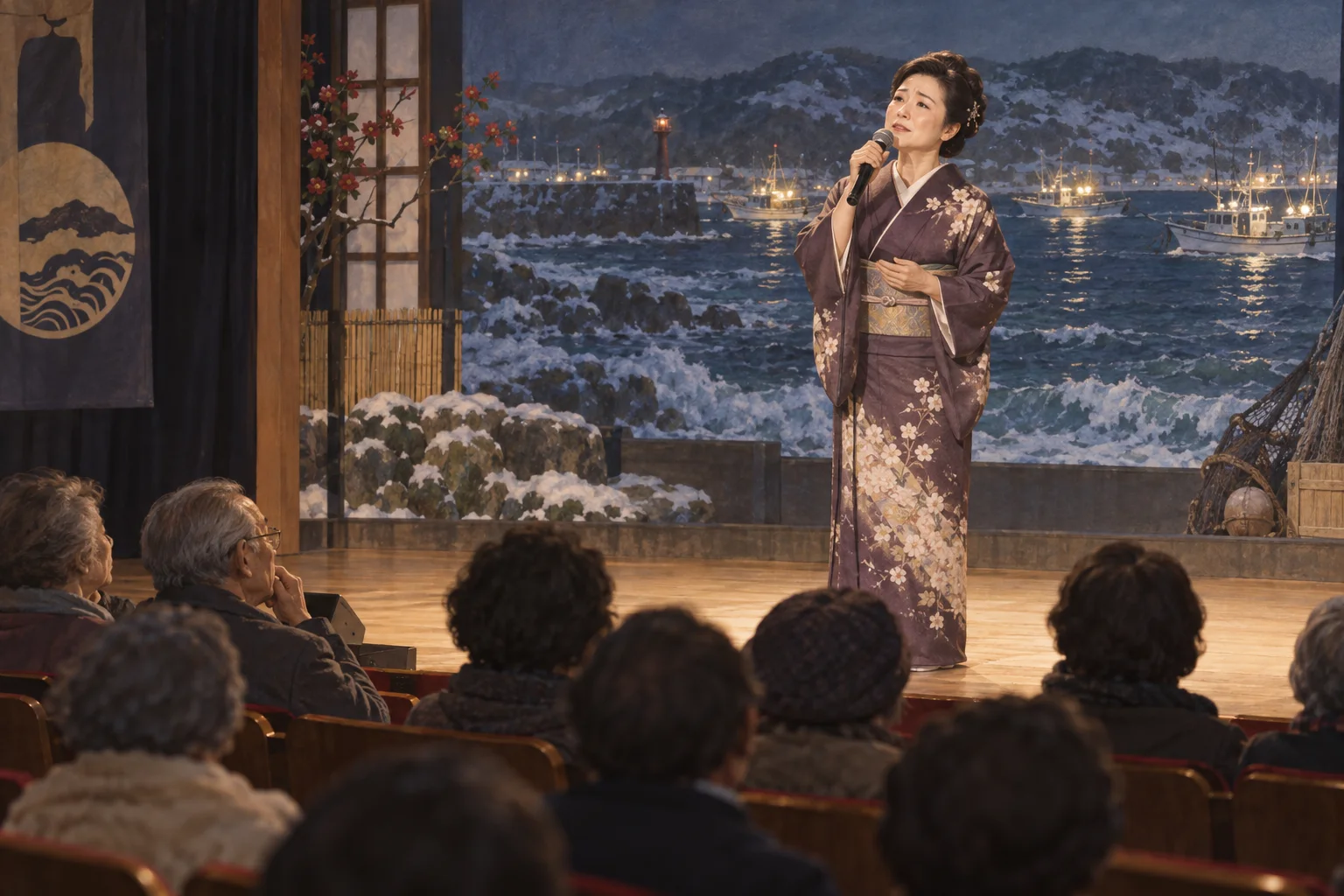
Enka is a genre of Japanese popular song characterized by a wavering vocal technique, minor-key melodies and lyrics about lost love, drinking alone, the sea in winter and the hometown you left. Singers perform in formal kimono or suits. It is strongly associated with older listeners and with the New Year's Eve song program.
参As a short speechスピーチ・英作文
Enka is a genre of Japanese popular ballad, and it is often described as the sound of the Japanese heart, which is worth examining. The music has recognizable features: melodies in a minor pentatonic scale, a deliberate wavering of the voice called kobushi, and lyrics that return again and again to a small set of images, a woman waiting, a man drinking alone, snow, the sea in winter, and the hometown someone left behind and cannot return to.
Performers appear in formal kimono or evening dress and stand very still. The label enka in its current sense settled in the postwar decades, so although it feels timeless it is not an ancient tradition.
Its audience skews old, and its long-standing annual showcase is the New Year's Eve song contest on public television. Many younger Japanese people rarely listen to it, but they often know a few standards from hearing older relatives sing them at karaoke.
演歌えんかenkasentimental Japanese ballads
「日本の心」と言われるが、今の形になったのは戦後のこと。
壱一言で言うとIn one line
演歌とは、恋、別れ、酒、故郷を歌う、情のこもった日本の歌謡です。
弐30秒で説明するIn 30 seconds
演歌は、揺らすような歌い方、短調の旋律、そして失った恋、独りの酒、冬の海、離れた故郷といった歌詞を特徴とする日本の歌謡の一分野です。歌手は着物や礼服で歌います。年配の聴き手と、大晦日の歌番組に強く結びついています。
参スピーチ・英作文As a short speech
演歌は日本の歌謡の一分野で、しばしば日本人の心の音楽だと言われますが、その言い方は検討する値打ちがあります。音楽には分かりやすい特徴があります。短音階の五音を用いた旋律、こぶしと呼ばれる意図的な声の揺らし、そして少数の情景に何度でも戻っていく歌詞です。
待つ女、独りで飲む男、雪、冬の海、離れたまま帰れない故郷。歌手は着物か礼服で、ほとんど動かずに立って歌います。今日の意味での「演歌」という呼び名が定まったのは戦後のことなので、時代を超えたもののように感じられても、古い伝統ではありません。
聴き手は高齢層に偏り、長く続く年に一度の大きな舞台は大晦日の歌番組です。若い世代の多くはふだん聴きませんが、年上の家族がカラオケで歌うのを聞いて、定番の曲をいくつか知っていることがよくあります。
こう聞かれたらQuestions people actually ask
QIs it a traditional form?
ANot in the sense of folk or classical music. The word has older roots in political songs of the Meiji period, but the genre as heard today took shape in the postwar decades. It sounds traditional partly because the singers wear kimono.
伝統的な芸能なのですか。民謡や古典音楽という意味では違います。言葉そのものは明治期の演説の歌に古い根を持ちますが、今日聴かれる形の分野としては戦後に成立しました。伝統的に響くのは、歌手が着物を着ていることも一因です。
QWhat is that wavering in the voice?
AIt is called kobushi, a controlled ornamentation where the pitch bends and trembles around the note. It is a learned technique, judged in karaoke scoring machines, and a singer's kobushi is discussed the way a guitarist's vibrato might be.
声が揺れているのは何ですか。こぶしと呼ばれる、音の周りで高さを揺らし震わせる装飾です。技術として習得するもので、カラオケの採点機にも項目があります。歌手のこぶしは、ギターのビブラートが語られるのと同じように話題になります。
そのまま使えるフレーズPhrases you can use
- The songs are about loss and the hometown.別れと故郷を歌う曲です。
- That wavering in the voice is called kobushi.あの声の揺らしをこぶしと言います。
- It took shape after the war.戦後に今の形になりました。
- Young people know it from karaoke.若い人はカラオケで知っています。
豆知識Background
「演歌」という語は、明治期に演説の代わりに歌で主張を伝えた「演説歌」に由来するとされます。今日の意味での分野として確立したのは戦後で、1960年代以降に呼び名が定着したと説明されます。大晦日の紅白歌合戦は長く演歌の大きな舞台で、出場歌手の構成が世相を映すと語られてきました。カラオケの採点機には、こぶしやビブラートを数える項目があります。近年は若い歌手が演歌に取り組む例もあり、海外出身の演歌歌手も活躍しています。
出典日本文化ナビ(原田英語.com)「演歌を英語で説明する(enka)」https://www.haradaeigo.com/japanese-culture/en/enka
- 文
- 日本文化ナビ編集部(原田英語.com)— 英文・和訳・解説はすべて独自に作成
- イラスト
- 日本文化ナビ オリジナル
- 発行
- 原田英語.com https://www.haradaeigo.com/
- 印刷日
- 2026.10.17
© 2026 Harada Eigo (原田英語.com). Text and illustration: Japan Culture Navi.
ページはこちら