絵文字
壱In one line一言で言うと
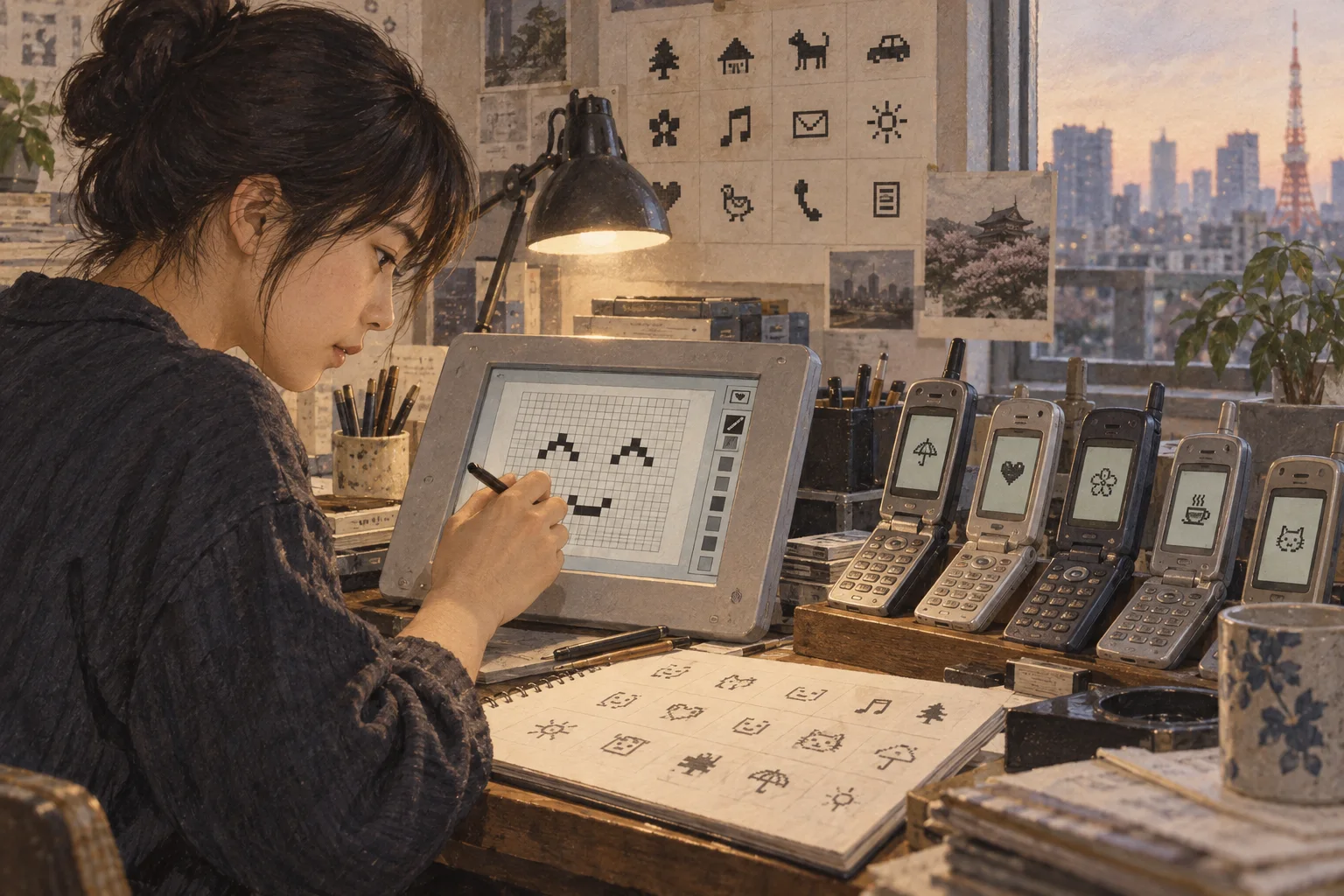
Emoji are the small picture characters that came out of Japanese mobile phones in the 1990s.
弐In 30 seconds30秒で説明する
Emoji means picture character: e for picture and moji for character. They were created for Japanese mobile phones in the late 1990s, when messages were limited to very few characters and a single symbol could carry a whole feeling. A set of 176 designed for a Japanese carrier in 1999 is usually named as the starting point. The word has nothing to do with the English word emotion.
参As a short speechスピーチ・英作文
Emoji is a Japanese word made of two parts: e, meaning picture, and moji, meaning written character. It sounds like the English word emotion, but that is a coincidence. Emoji were invented for Japanese mobile phones in the late 1990s, when a message could only hold a small number of characters and there was no room for tone.
A set of 176 tiny pictures designed in 1999 for a Japanese carrier is the best-known early set, and the original set is now held in the collection of the Museum of Modern Art in New York.
For years they only worked inside Japan, until the international standard for text added them and the rest of the world started using them. A few are still quite Japanese and confuse people abroad, such as the bowing figure and the swirl that means a fish cake slice.
絵文字えもじemojipicture characters
世界中が使っている emoji は、日本の携帯電話から出た。
壱一言で言うとIn one line
絵文字とは、1990年代の日本の携帯電話から生まれた小さな絵の文字のことです。
弐30秒で説明するIn 30 seconds
絵文字は「絵」と「文字」でできた言葉です。1990年代の終わり、携帯電話のメッセージが非常に短い文字数に限られていた時代に、記号ひとつで気持ちを伝えるために作られました。1999年に日本の通信会社向けに設計された176個の一組が、始まりとして挙げられるのが普通です。英語の emotion とは語源の関係がありません。
参スピーチ・英作文As a short speech
絵文字は「絵」と「文字」の二つからできた日本語です。英語の emotion に似て聞こえますが、それは偶然です。絵文字は1990年代の終わり、携帯電話のメッセージが少ない文字数しか入らず、口調を伝える余地がなかった時代に、日本で生まれました。
1999年に日本の通信会社向けに設計された176個の小さな絵の一組が初期の代表として知られ、その最初の一組は今、ニューヨーク近代美術館の収蔵品になっています。
長い間、日本の中でしか使えませんでしたが、文字の国際規格に採り入れられてから世界中が使うようになりました。今も日本的で海外の人を戸惑わせるものがいくつかあり、お辞儀をする人の絵や、渦巻きのなると巻きの絵などがそうです。
こう聞かれたらQuestions people actually ask
QDoes emoji come from the word emotion?
ANo. It is two Japanese words joined: e means picture and moji means character. The resemblance to emotion and emoticon is pure coincidence.
絵文字は emotion から来た言葉ですか。違います。「絵」と「文字」という二つの日本語をつないだ言葉です。emotion や emoticon に似ているのは偶然です。
QWhy are some emoji things I have never seen?
ABecause the early sets were designed for Japanese users. The bowing figure, the white flower stamp teachers give for good work, the pink and white fish cake, the sign for a Japanese post office: all of these made sense to the first users and traveled worldwide by accident.
どうして見たこともないものの絵文字があるのですか。初期の一組が日本の利用者に向けて設計されたからです。深くお辞儀をする人、先生がよくできましたと押す白い花の印、ピンクと白のなると巻き、日本の郵便局の記号。どれも最初の利用者には自明で、そのまま世界に出て行きました。
QDoes the same emoji mean the same thing everywhere?
ANot always. The folded hands are read as prayer in many countries and as thank you or please in Japan. The face with a single drop can mean sadness abroad and relief in Japan, since the drop comes from a comic convention for sweat.
同じ絵文字は、どこでも同じ意味ですか。必ずしも同じではありません。合わせた手は多くの国では祈りと読まれ、日本ではありがとうやお願いの意味で使われます。一粒のしずくがついた顔は、海外では悲しみに見えますが、日本では安心を表します。しずくが漫画の汗の記号から来ているからです。
誤解されやすいA common misunderstanding
MYTHEmoji are an American invention that spread to Japan.絵文字はアメリカで生まれて日本に来たと思われがちです。
FACTThey started on Japanese mobile phones in the 1990s and only became worldwide after the international text standard adopted them.実際は1990年代の日本の携帯電話から始まり、文字の国際規格に採り入れられてから世界に広がりました。
そのまま使えるフレーズPhrases you can use
- The word means picture character in Japanese.絵文字という語は日本語で絵の文字という意味です。
- It has nothing to do with the word emotion.emotion という語とは関係がありません。
- These started on Japanese phones in the 1990s.1990年代の日本の携帯電話から始まりました。
- That one is a Japanese fish cake.あれは日本のなると巻きです。
- In Japan this one means thank you.日本ではこれはありがとうの意味です。
豆知識Background
1999年に設計された176個の絵文字は、2016年にニューヨーク近代美術館が収蔵しました。なお、それより前の1997年に出た携帯電話にも絵文字を使える機種があり、この一組が最初だとは言い切れません。1つが12かける12の点で描かれていたため、形を思い切って省く必要があり、それが今のわかりやすさにつながっています。日本の携帯電話では通信会社ごとに絵文字が違い、他社に送ると別の絵になる問題が長く続きました。世界共通になったのは、文字の国際規格に組み込まれてからです。なお顔文字は絵文字とは別で、記号を並べて顔を作るものを指します。
出典日本文化ナビ(原田英語.com)「絵文字を英語で説明する(emoji)」https://www.haradaeigo.com/japanese-culture/en/emoji
- 文
- 日本文化ナビ編集部(原田英語.com)— 英文・和訳・解説はすべて独自に作成
- イラスト
- 日本文化ナビ オリジナル
- 発行
- 原田英語.com https://www.haradaeigo.com/
- 印刷日
- 2026.10.17
© 2026 Harada Eigo (原田英語.com). Text and illustration: Japan Culture Navi.
ページはこちら