道場
壱In one line一言で言うと
A dojo is a hall for practicing a martial art, and the word originally came from Buddhism.
弐In 30 seconds30秒で説明する
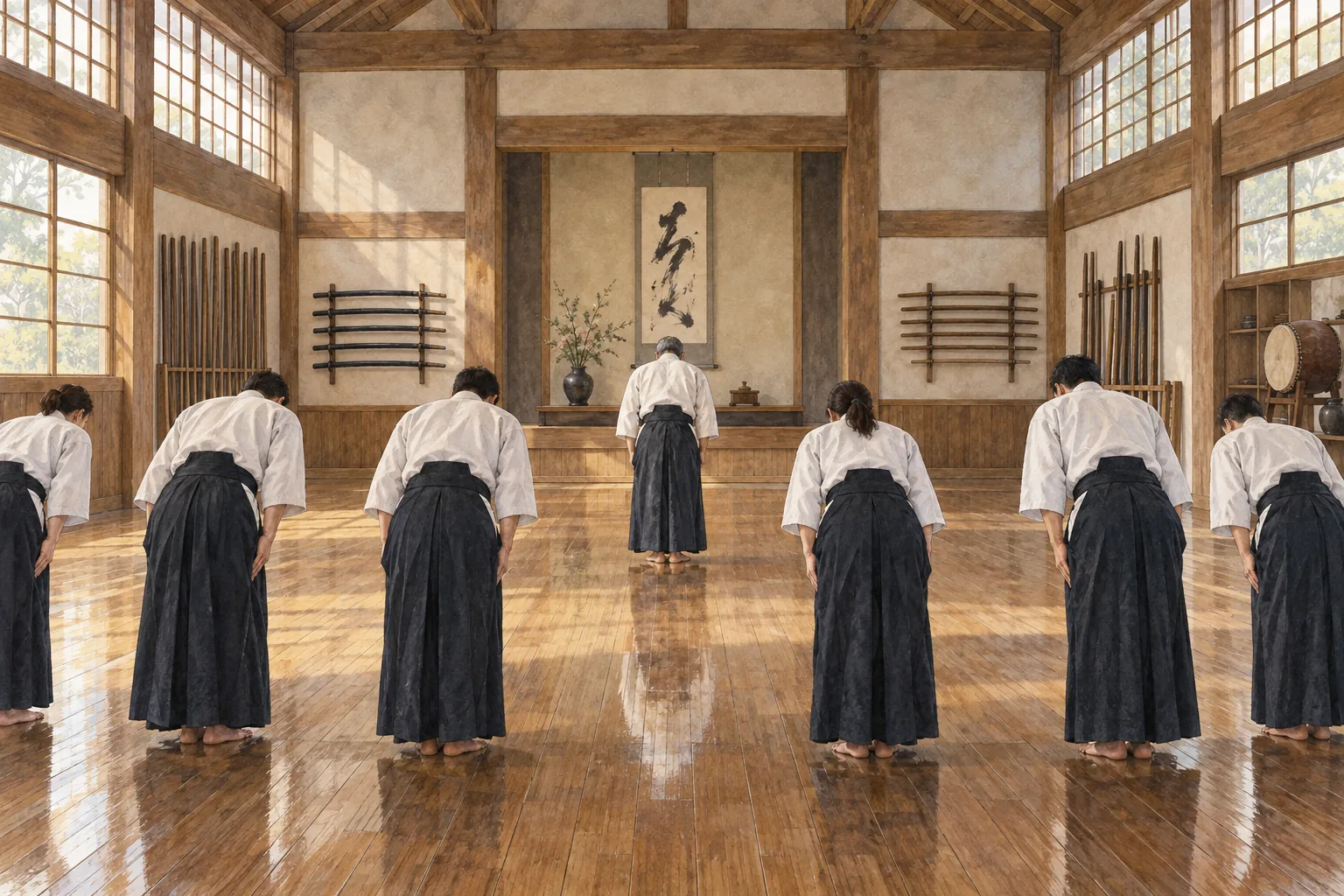
A dojo is the hall where a martial art is practiced. The word is Buddhist in origin, meaning the place where one attains the way, and it was later borrowed for martial training. Certain customs are standard: you bow entering and leaving, you keep the floor clean, and the upper end of the hall, where the teacher sits and any shrine is placed, is treated as the place of honor.
参As a short speechスピーチ・英作文
A dojo is a training hall for a martial art, and the word carries more weight than the English word gym. It began as a Buddhist term for the place where one attains the way, and martial arts borrowed it, which tells you how the practice was understood.
Certain customs are near universal. You bow when you enter and when you leave, to the room itself, not to a person. The hall has an upper end, often with a small shrine or a portrait of the founder, and you do not turn your back on it carelessly or sit with your feet toward it.
Students clean the floor themselves before and after practice, and that is treated as part of the training rather than as a chore. Visitors are usually welcome to watch, but ask first, sit at the lower end, and do not photograph without permission.
道場どうじょうdojoa training hall
もとは仏教の言葉。「悟りを開く場所」という意味だった。
壱一言で言うとIn one line
道場とは武道を稽古する場のことで、もとは仏教の言葉でした。
弐30秒で説明するIn 30 seconds
道場とは武道を稽古する場です。語はもともと仏教のもので、道を得る場所を意味し、のちに武道の稽古の場に借りられました。作法は共通しています。出入りのときに礼をし、床を清潔に保ち、指導者が座り神棚が置かれる上座は、敬うべき場所として扱われます。
参スピーチ・英作文As a short speech
道場は武道の稽古の場で、この語は英語の gym よりも重みを持ちます。もとは仏教で、道を得る場所を指す言葉でした。それを武道が借りたことに、稽古がどう理解されていたかが表れています。作法はほぼ共通しています。
入るときと出るときに礼をします。人にではなく、その部屋に対してです。道場には上座があり、小さな神棚や創始者の写真が置かれていることが多く、そちらに不用意に背を向けたり、足を向けて座ったりはしません。
床の掃除は稽古の前後に稽古する者自身が行い、雑用ではなく稽古の一部と考えられています。見学はたいてい歓迎されますが、まず断りを入れ、下座に座り、許可なく撮影しないでください。
こう聞かれたらQuestions people actually ask
QCan I just walk in and watch?
AAsk at the door rather than walking in. Most places are happy to have visitors watch a session, but they will want to seat you somewhere appropriate and tell you the rules about photography and about not walking across the training area.
ふらりと入って見学してもいいですか。入ってしまう前に、入口でひと声かけてください。多くの道場は見学を歓迎しますが、座る場所を案内し、撮影や稽古の場所を横切らないことについて説明したいと考えています。
QWhy do people bow to an empty wall?
AThey are bowing to the upper end of the hall, which represents the tradition being practiced, not a god you are being asked to believe in. Guests are not expected to bow, though standing quietly while others do is appreciated.
どうして何もない壁に向かって礼をするのですか。礼をしているのは上座に対してで、それは稽古している伝統を表すものです。信じることを求められる神ではありません。見学者に礼は求められませんが、周りが礼をしている間、静かに立っていると喜ばれます。
そのまま使えるフレーズPhrases you can use
- Bow when you enter and when you leave.入るときと出るときに礼をします。
- Please ask before taking photos.撮影の前にひと声かけてください。
- We clean the floor ourselves.床は自分たちで掃除します。
- Don't sit with your feet toward the front.上座に足を向けて座らないでください。
豆知識Background
「道場」はサンスクリット語の菩提道場の訳語に由来し、釈迦が悟りを開いた場所を指す仏教の語でした。武道の稽古の場を指すようになったのは後のことです。学校の武道場では床の弾力や畳の敷き方に規格があり、柔道と剣道で床の作りが異なります。英語でも dojo がそのまま使われ、近年は武道に限らず、何かを鍛える場所という比喩で使われることもあります。道場破りという言葉は物語で有名ですが、現代の道場で行われるものではありません。
出典日本文化ナビ(原田英語.com)「道場を英語で説明する(dojo)」https://www.haradaeigo.com/japanese-culture/en/dojo
- 文
- 日本文化ナビ編集部(原田英語.com)— 英文・和訳・解説はすべて独自に作成
- イラスト
- 日本文化ナビ オリジナル
- 発行
- 原田英語.com https://www.haradaeigo.com/
- 印刷日
- 2026.10.17
© 2026 Harada Eigo (原田英語.com). Text and illustration: Japan Culture Navi.
ページはこちら