団子
壱In one line一言で言うと
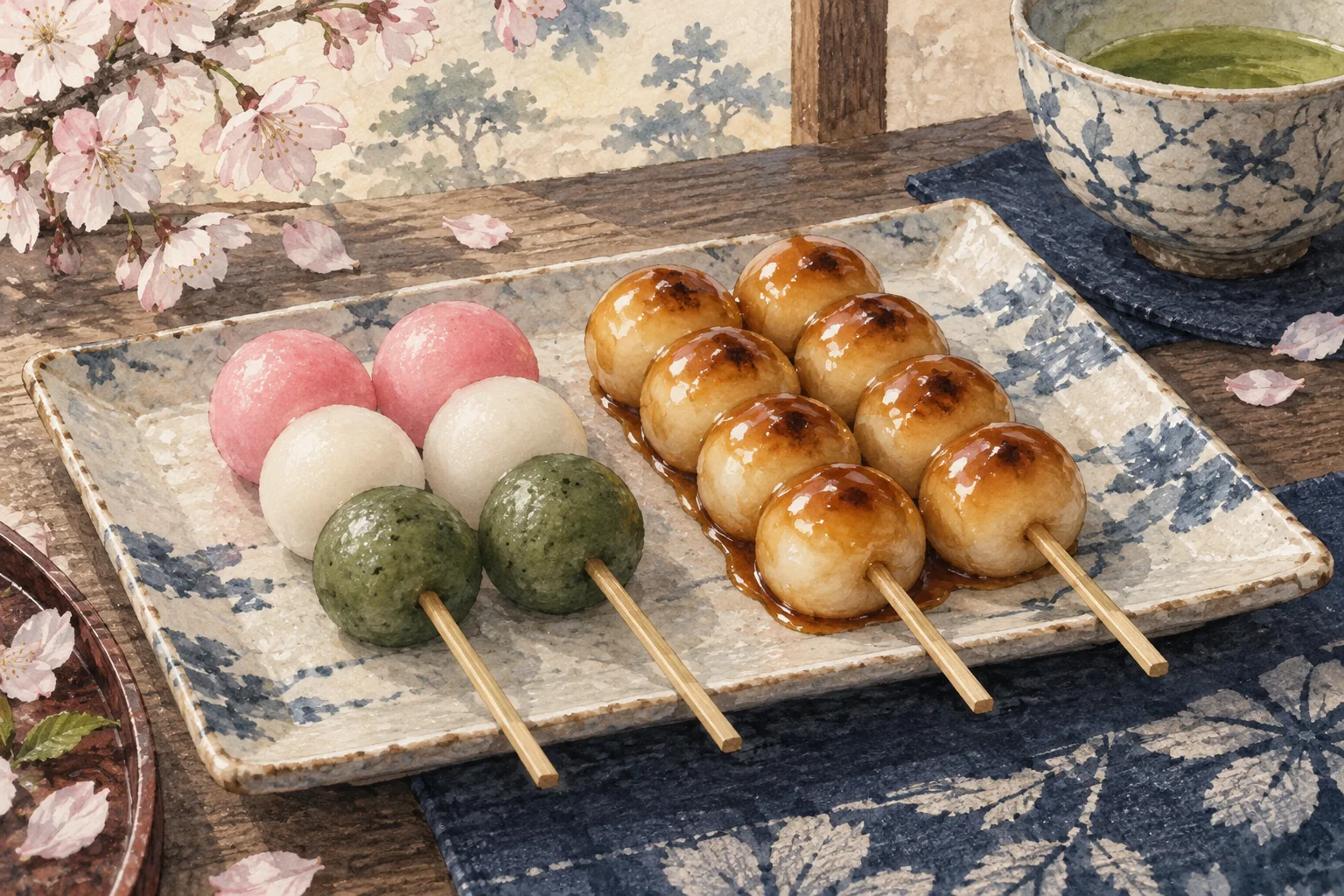
Dango are small chewy dumplings of rice flour, usually three or four on a skewer.
弐In 30 seconds30秒で説明する
Dango are made by kneading rice flour with water, shaping it into balls and steaming or boiling them. They are chewy rather than sweet on their own, so they are served with a topping: a sweet soy glaze, sweet red bean paste, or soybean flour. You buy them at festival stalls, tea houses and supermarkets. Different kinds belong to different seasons and occasions, and they cost very little.
参As a short speechスピーチ・英作文
Dango are the most everyday of Japanese sweets. They are balls of rice flour, kneaded with hot water, shaped by hand and then steamed or boiled, which gives them a soft, springy chew quite unlike a Western dumpling. Plain dango have almost no flavor, so the topping is the point.
The best known is mitarashi, brushed with a thick glaze of soy sauce, sugar and starch, which is salty and sweet at once and slightly burnt from the grill. Others come coated in sweet red bean paste, in roasted soybean flour, or in a pale green version made with mugwort.
Dango are tied to the calendar: white, round ones stacked in a pyramid for moon viewing in autumn, and pink, white and green ones on one skewer for cherry blossom season. There is a well-known saying, dumplings over flowers, which pokes fun at people who go to see the blossoms and spend the whole time eating.
団子だんごdangorice flour dumplings on a skewer
串に三つか四つ。花より団子、月見団子、みたらし。和菓子の中でいちばん庶民的。
壱一言で言うとIn one line
団子とは米の粉で作る小さくもちもちした玉で、たいてい三つか四つを串に刺します。
弐30秒で説明するIn 30 seconds
団子は米の粉を水で練って丸め、蒸すか茹でて作ります。それ自体は甘くなくもちもちしているので、甘辛い醤油のたれ、あんこ、きなこなどをつけて出します。祭りの屋台、茶店、スーパーで買えます。種類によって季節や行事が決まっていて、値段はとても安いです。
参スピーチ・英作文As a short speech
団子は日本の菓子の中で最も日常的なものです。米の粉を湯で練り、手で丸めて蒸すか茹でたもので、西洋のダンプリングとはまったく違う、やわらかく弾むような歯ごたえになります。素の団子にはほとんど味がないので、かけるものが肝心です。
最も知られているのはみたらしで、醤油と砂糖とでんぷんで作った濃いたれを塗り、塩気と甘さが同時に来て、焼いた焦げの香りがします。ほかにあんこをまとわせたもの、きなこをまぶしたもの、よもぎを混ぜた淡い緑のものがあります。
団子は暦と結びついています。秋の月見には白くて丸いものをピラミッド型に積み、桜の季節には桃色と白と緑を一本の串に刺します。「花より団子」という有名な言い回しがあり、花を見に行って食べてばかりいる人をからかう言葉です。
こう聞かれたらQuestions people actually ask
QWhat's the difference between dango and mochi?
AMochi is made by pounding cooked glutinous rice grains into a mass, so it is stretchy and can be pulled. Dango is made from rice flour mixed with water, so it is firmer and holds its round shape. Mochi is especially tied to New Year, though both are eaten all year.
団子と餅はどう違うのですか。餅は蒸したもち米の粒をついて塊にするので、伸びて引っ張れます。団子は米の粉を水で練るので、しっかりしていて丸い形を保ちます。餅はとくに正月と結びついていますが、どちらも一年中食べます。
QWhat does hana yori dango mean?
ALiterally dumplings rather than flowers. It describes choosing something practical or tasty over something beautiful, and it is used affectionately about people who go to a cherry blossom party mainly to eat and drink. It is one of the best-known Japanese proverbs.
「花より団子」とはどういう意味ですか。文字どおり「花より団子」です。美しいものより実用的でおいしいものを選ぶことを表し、花見に行って主に飲み食いしている人を親しみをこめて言うのに使います。日本でもっともよく知られたことわざの一つです。
QWhy are the moon-viewing ones stacked in a pile?
APlain white dango are piled into a small pyramid on a stand and set out with pampas grass to look at the harvest moon. The round white shape stands for the moon. The number in the pile varies by custom, and families eat them afterward.
月見の団子は、どうして積んであるのですか。白い素の団子を台の上に小さなピラミッド型に積み、すすきと一緒に飾って中秋の月を眺めます。白くて丸い形は月を表します。積む数は習わしによって違い、そのあと家族で食べます。
そのまま使えるフレーズPhrases you can use
- Three dumplings on a skewer, please.串団子を一本ください。
- The glaze is sweet and salty at the same time.たれは甘くて同時にしょっぱいです。
- They're chewy, not sweet by themselves.もちもちしていて、それ自体は甘くありません。
- We eat these for the moon viewing in autumn.秋のお月見にこれを食べます。
- There's a saying: dumplings over flowers.「花より団子」という言葉があります。
豆知識Background
団子は上新粉などの米の粉を練って丸め、蒸すか茹でて作る菓子で、ついて作る餅とは製法が異なります。みたらし団子は京都の下鴨神社の御手洗祭にちなむ名とされ、串に刺した玉の数にも由来の説がありますが、諸説あります。行事と結びついた団子が多く、月見団子、花見団子、彼岸の団子、法事の枕団子などがあります。花見団子の桃色・白・緑の三色は、桜・雪・新芽になぞらえる説明がよく知られています。「花より団子」は風流より実利を取ることのたとえで、江戸のいろはかるたにも採られています。地域色も強く、みたらしのたれの濃さや、あんの種類、串に刺す数は土地によって違います。
出典日本文化ナビ(原田英語.com)「団子を英語で説明する(dango)」https://www.haradaeigo.com/japanese-culture/en/dango
- 文
- 日本文化ナビ編集部(原田英語.com)— 英文・和訳・解説はすべて独自に作成
- イラスト
- 日本文化ナビ オリジナル
- 発行
- 原田英語.com https://www.haradaeigo.com/
- 印刷日
- 2026.10.17
© 2026 Harada Eigo (原田英語.com). Text and illustration: Japan Culture Navi.
ページはこちら