消費税
壱In one line一言で言うと
Shohizei, or consumption tax, is Japan's value-added tax, 10 percent since 2019, 8 percent on food and drink to go.
弐In 30 seconds30秒で説明する
Introduced in 1989 at 3 percent, raised to 5 in 1997, 8 in 2014 and 10 in 2019. The 2019 rise came with a reduced rate of 8 percent for food and non-alcoholic drink bought to take out, and for newspapers by subscription. Eating the same item in the shop makes it 10. Prices are now generally shown tax-included, and visitors can get a tax refund on qualifying purchases.
参As a short speechスピーチ・英作文
Japan's consumption tax is a value-added tax charged on nearly everything, and there are three things worth knowing. First, the rate: 10 percent, reached in 2019 after a long political fight. It was introduced in 1989 at 3 percent and went to 5, then 8, then 10, each rise contentious enough to affect elections, which is why the last was postponed twice.
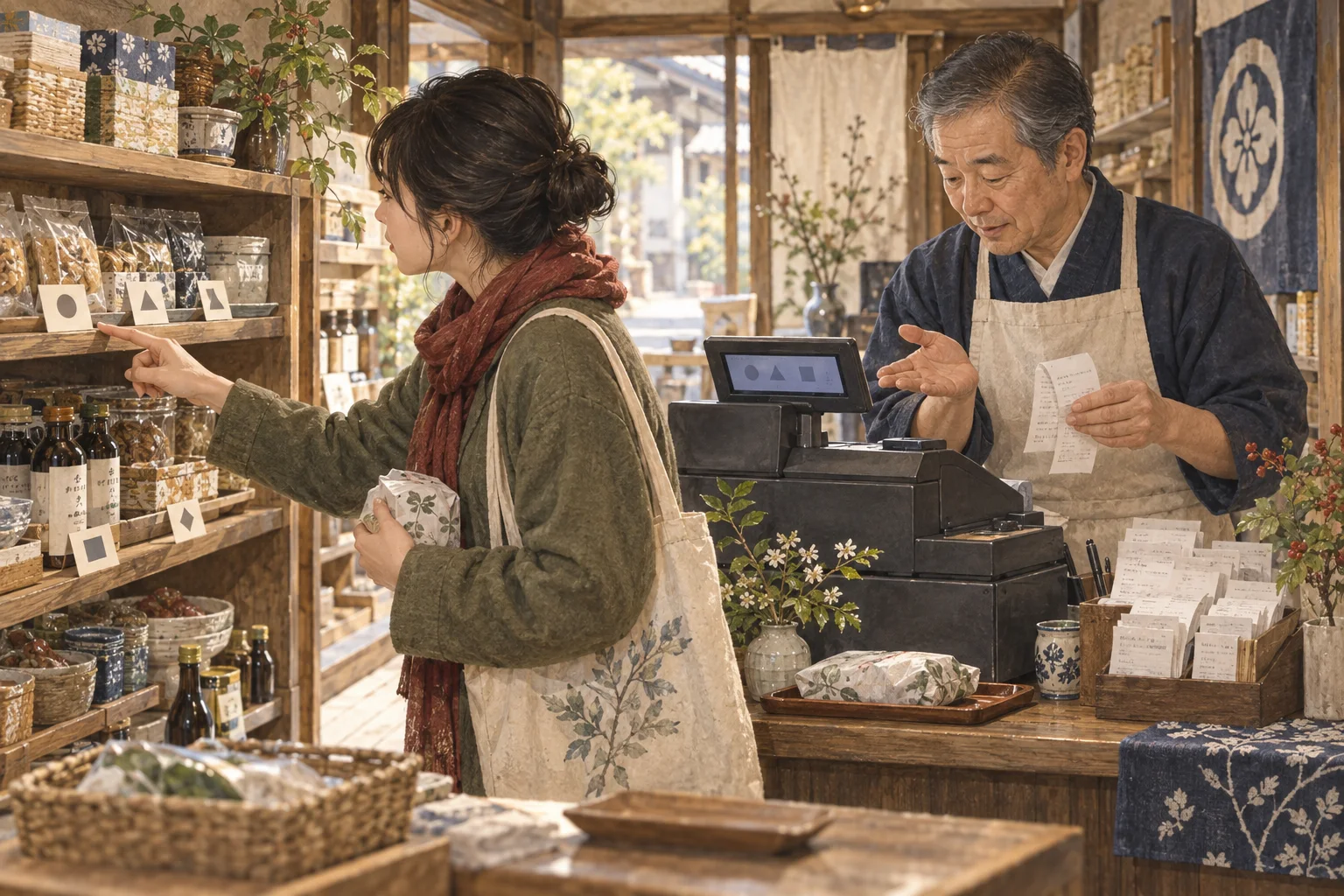
Second, the reduced rate. Food and non-alcoholic drink are taxed at 8 percent, but only if you take them out. Buy a coffee to go and it is 8; sit down with it and it is 10, so the register asks which you are doing. Alcohol and eating out stay at 10, and newspapers delivered by subscription are 8, which tells you something about how the exceptions were negotiated.
Third, prices. Shops are expected to display the tax-included price, so what is on the shelf is broadly what you pay, and tipping does not exist, so there is nothing else added. Short-term visitors can get the tax back above a threshold at registered shops, with a passport; the procedure changes in late 2026.
消費税しょうひぜいshohizeiJapan's sales tax, its rises, and the reduced rate
10パーセント。ただし持ち帰る食品は8パーセント。店内で食べると10になる。
壱一言で言うとIn one line
消費税とは、日本の付加価値税で、2019年から10パーセント、持ち帰る飲食料品には8パーセントの軽減税率が適用されるものです。
弐30秒で説明するIn 30 seconds
1989年に3パーセントで導入され、1997年に5、2014年に8、2019年に10になりました。2019年の引き上げでは、持ち帰る飲食料品と、定期購読の新聞に8パーセントの軽減税率が設けられます。同じものを店内で食べれば10です。価格は現在、税込みでの表示が基本で、旅行者は条件を満たす買い物で免税を受けられます。
参スピーチ・英作文As a short speech
日本の消費税は、ほぼすべてにかかる付加価値税です。知っておくとよいことが三つあります。一つめは税率。2019年に10パーセントになりました。長い政治的な争いの末のことです。1989年に3パーセントで導入され、5、8、10と上がってきました。どの引き上げも選挙に響くほど争われ、最後の引き上げは二度延期されています。
二つめは軽減税率。飲食料品と酒類以外の飲み物は8パーセントですが、持ち帰る場合に限られます。珈琲を持ち帰れば8、座って飲めば10。だからレジでどちらかを尋ねられます。酒と外食は10のまま、定期購読の新聞は8です。例外がどう決まったかが、そこから見て取れます。三つめは表示です。
店は税込みの価格を示すことになっているので、棚に出ている額がほぼ支払う額です。チップの習慣もないので、ほかに足されるものはありません。短期滞在の旅行者は、登録された店で一定額以上の買い物をすれば、旅券を示して免税を受けられます。ただし2026年の後半から手続きが変わるので、店で確かめてください。
こう聞かれたらQuestions people actually ask
QWhy does the shop ask if I'm eating in?
ABecause the tax differs: 8 percent to take out, 10 percent to eat in. The question is about the tax rate, not the packaging.
店内で食べるか聞かれるのはなぜですか。税率が違うからです。持ち帰りは8パーセント、店内は10パーセント。包み方ではなく税率を尋ねています。
QIs the price on the label what I pay?
AGenerally yes. Tax-included display is the rule, though some shops show both. There is no tipping, so nothing else is added.
表示の値段を払えばよいのですか。おおむねそうです。税込み表示が原則で、両方を出す店もあります。チップはないので、ほかに加わるものはありません。
QHow does the tourist refund work?
AAt shops displaying the tax-free sign, with your passport, above a set purchase amount. The rules and the amounts have changed over time, so check at the counter.
免税はどう受けるのですか。免税の表示がある店で、旅券を示し、一定額以上の買い物をした場合です。条件や金額は改められてきたので、店で確かめてください。
誤解されやすいA common misunderstanding
MYTHJapan has no sales tax because prices are round numbers.日本は値段がきりのよい数字だから消費税がない、と思われがちです。
FACTThere is a 10 percent tax; it is simply included in the displayed price, which makes it invisible at the register.10パーセントの税があります。表示の価格に含まれているので、レジで目に見えないだけです。
そのまま使えるフレーズPhrases you can use
- The consumption tax is 10 percent.消費税は10パーセントです。
- Food to go is taxed at 8.持ち帰る食べ物は8パーセントです。
- Eating in makes it 10.店内で食べると10になります。
- The displayed price includes tax.表示は税込みです。
- There's no tipping, so nothing is added.チップはないので、何も足されません。
豆知識Background
消費税は1989年(平成元年)に3パーセントで導入され、1997年に5パーセント、2014年に8パーセント、2019年に10パーセントとなった。2019年の引き上げと同時に軽減税率が導入され、酒類と外食を除く飲食料品、および週2回以上発行される定期購読の新聞が8パーセントに据え置かれた。総額表示は2021年4月から義務化されている。
出典日本文化ナビ(原田英語.com)「消費税を英語で説明する(shohizei)」https://www.haradaeigo.com/japanese-culture/en/consumption-tax
- 文
- 日本文化ナビ編集部(原田英語.com)— 英文・和訳・解説はすべて独自に作成
- イラスト
- 日本文化ナビ オリジナル
- 発行
- 原田英語.com https://www.haradaeigo.com/
- 印刷日
- 2026.10.17
© 2026 Harada Eigo (原田英語.com). Text and illustration: Japan Culture Navi.
ページはこちら