茶柱が立つ
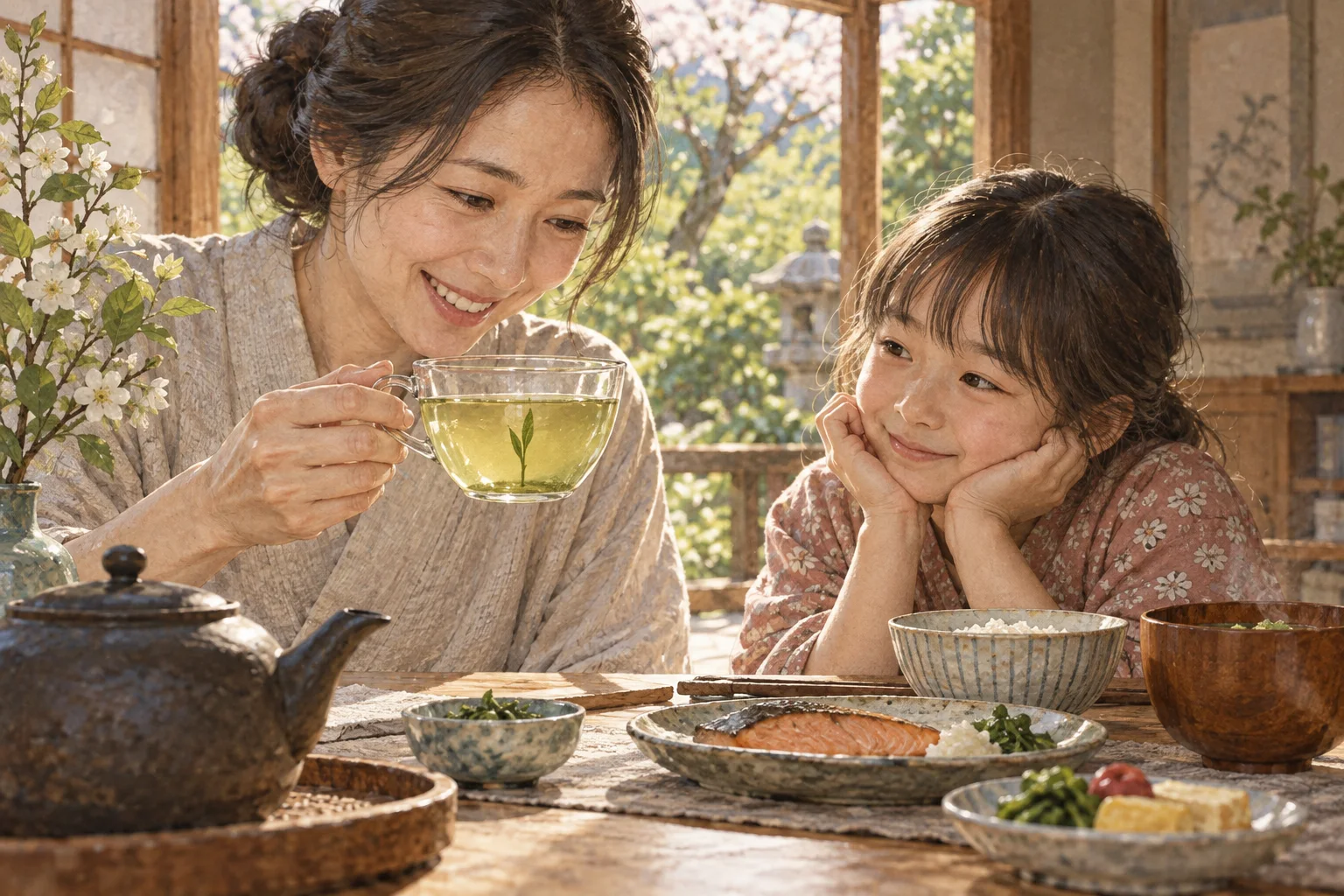
壱In one line一言で言うと
If a tea stem floats upright in your cup, it's traditionally seen as a small sign of good luck.
弐In 30 seconds30秒で説明する
Chabashira ga tatsu describes a tea stem floating upright in your cup instead of lying flat, and tradition treats it as a small good omen. One theory links it to hashira, the word for a house's main pillar and for counting Shinto deities. Another says tea merchants spread the idea to make cheap bancha, which has more stems, sound lucky. Telling anyone is said to cancel the luck, so people usually keep it to themselves.
参As a short speechスピーチ・英作文
Chabashira ga tatsu, literally "a tea stem stands up," describes the rare moment when a stem from the tea leaves floats upright in your cup rather than lying flat or sinking. Tradition treats this as a small sign of good luck, and there are a couple of competing explanations for why.
One connects it to the word hashira, meaning pillar, the word used for a traditional house's load-bearing pillar and for counting Shinto deities, so an upright stem suggests stability and even divine favor. A more down-to-earth theory says the custom was spread by tea merchants during the Edo period: stems mostly show up in bancha, a cheaper grade of tea, rather than in premium leaves, so calling a stem lucky was a clever way to make that tea sound special.
A lighthearted rule that survives either way is that you shouldn't tell anyone if it happens to you, or the luck disappears, which turns it into a small, private moment rather than something to announce. I like that nobody seems bothered by not knowing which explanation is true; the superstition works fine either way.
茶柱が立つちゃばしらがたつchabashira ga tatsua tea stem standing upright in your cup, a small good-luck sign
湯呑みに茶の茎が立つと縁起がいい。実は江戸の商人の宣伝文句という説も。
壱一言で言うとIn one line
湯呑みの中で茶の茎がまっすぐ立つと、昔から小さな幸運のしるしとされています。
弐30秒で説明するIn 30 seconds
茶柱が立つとは、茶の茎が湯呑みの中で横たわらずまっすぐに浮かぶことで、言い伝えではこれを小さな吉兆とします。一つの説は、家を支える大黒柱や、神様を数えるときの「柱」と結びつけるものです。別の説では、茎の多い安価な番茶を縁起よく見せるため、茶商人がこの俗信を広めたといわれます。人に言うと運が逃げるとされるので、多くの人は黙って胸にしまっておきます。
参スピーチ・英作文As a short speech
茶柱が立つとは、文字どおり「茶の茎が立つ」ことで、茶葉の茎が横たわったり沈んだりせず、湯呑みの中でまっすぐ浮かぶという珍しい瞬間を指します。言い伝えではこれを小さな幸運のしるしとしており、その理由には競合する説明がいくつかあります。
一つは「柱」という言葉に結びつける説で、伝統的な家を支える大黒柱や、神様を数えるときの単位と同じ言葉であることから、まっすぐ立つ茎が安定や神の加護を思わせるというものです。もっと現実的な説では、この習わしは江戸時代の茶商人が広めたもので、茎は上質な茶葉ではなく安価な番茶に多く混じるため、茎が入っていると縁起がいいと客に言うことで、質の劣るお茶を特別に見せる巧みな手だったとされます。
どちらの説にせよ、これが起きたら誰にも言ってはいけない、言うと運が逃げるという気楽な決まりが今も伝わっており、それは人に告げるようなことではなく、小さく個人的な瞬間になっています。どちらの説明が正しいのか誰も気にしていないように見えるのが好きです。この俗信はどちらにしても十分に成り立っているからです。
こう聞かれたらQuestions people actually ask
QWhy is a floating tea stem considered lucky?
AThere are two common theories: one links it to hashira, the word for a supporting pillar and for counting Shinto deities, and the other claims Edo-period tea merchants invented the idea to make cheaper bancha tea, which has more stems, seem special.
どうして茶柱が立つと縁起がいいのですか。よくある説は二つあります。一つは、支える柱や神様を数える言葉である「柱」に結びつける説、もう一つは、茎の多い安価な番茶を特別に見せるため江戸時代の茶商人が考え出したという説です。
QDoes this happen with any type of tea?
AIt's mostly associated with loose-leaf green tea, since stems are more common in cheaper grades like bancha and rare in premium leaf tea.
どんなお茶でも起こることですか。主に急須で淹れる緑茶に見られます。茎は番茶のような安価な等級に多く、上質な茶葉にはあまり入らないためです。
そのまま使えるフレーズPhrases you can use
- Look, a tea stem is standing up in my cup!見て、湯呑みに茶柱が立ってる!
- That's supposed to be good luck.それって縁起がいいらしいよ。
- Don't tell anyone, or the luck might disappear.誰にも言わないで、運が逃げちゃうかも。
- It's rare because most tea has the stems removed.たいていのお茶は茎が取り除かれているから珍しいんです。
豆知識Background
茶柱が立つと縁起がいいとされる理由には諸説あり、家を支える「大黒柱」や神様を一柱・二柱と数える「柱」という言葉のイメージから、安定や神の加護に結びつけたという説がある。一方で、茎は上質な新茶にはほとんど入らず、安価な番茶に多く混ざることから、江戸時代の茶商人が売れにくい番茶を魅力的に見せるために広めた宣伝文句だったという説も語られる。人に言うと運が逃げるという俗信も伝わる。
出典日本文化ナビ(原田英語.com)「茶柱が立つを英語で説明する(chabashira ga tatsu)」https://www.haradaeigo.com/japanese-culture/en/chabashira-ga-tatsu
- 文
- 日本文化ナビ編集部(原田英語.com)— 英文・和訳・解説はすべて独自に作成
- イラスト
- 日本文化ナビ オリジナル
- 発行
- 原田英語.com https://www.haradaeigo.com/
- 印刷日
- 2026.10.17
© 2026 Harada Eigo (原田英語.com). Text and illustration: Japan Culture Navi.
ページはこちら