キャッシュレス決済
壱In one line一言で言うと
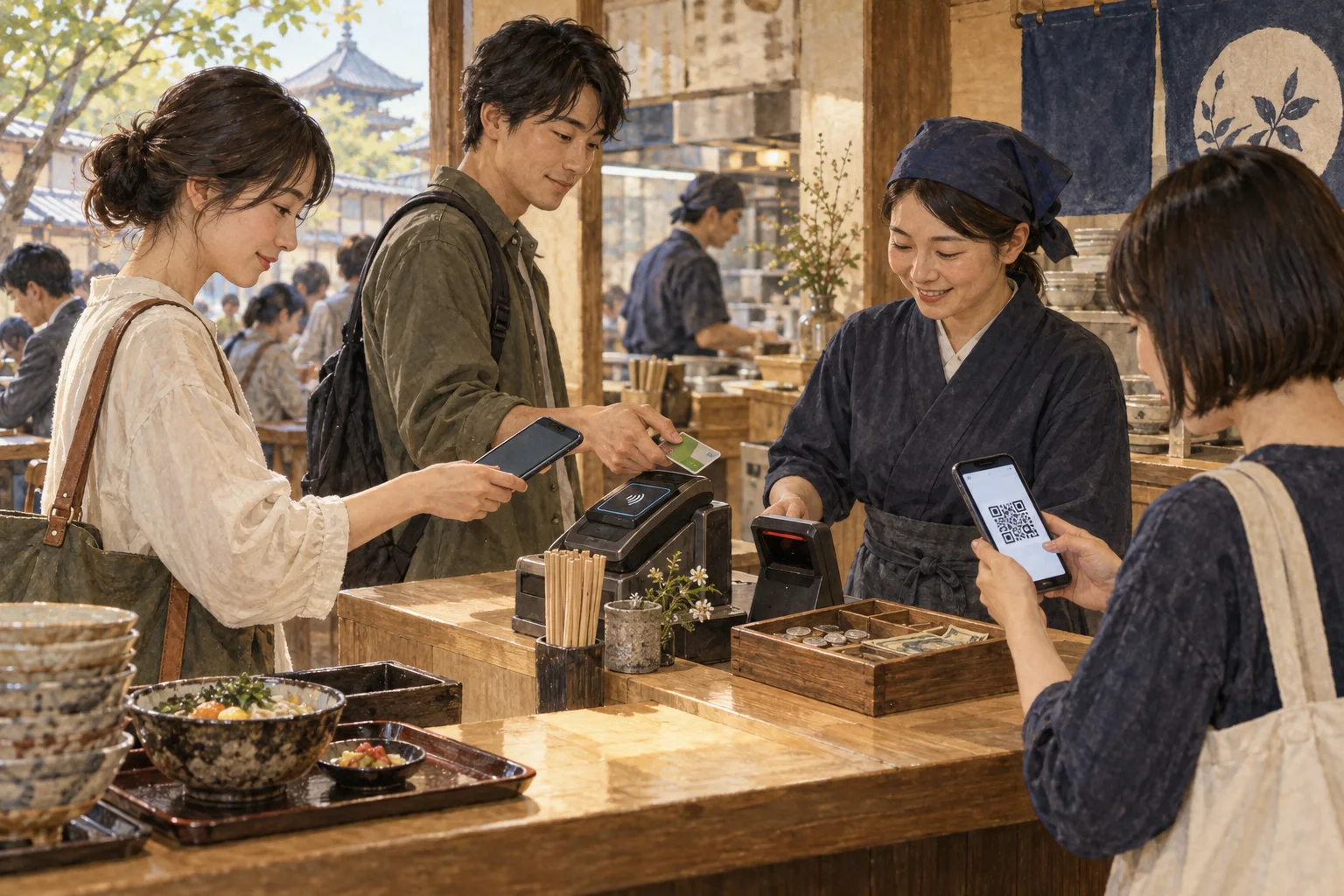
Cashless payment passed forty percent of Japanese consumer spending in 2024, but cash is still common.
弐In 30 seconds30秒で説明する
Japan was slow to move away from cash, but the shift is now real: cashless payment reached about forty-three percent of consumer spending in 2024. Most of that is credit cards, with QR code apps growing fastest. Even so, small restaurants, shrines, some clinics and rural buses may still take cash only, so carrying some notes is sensible.
参As a short speechスピーチ・英作文
Visitors often arrive expecting Japan to be futuristic and find themselves hunting for an ATM. The picture has changed faster than the reputation.
In 2024 cashless payment reached about forty-three percent of consumer spending, past the government's target of forty percent, and the composition is unusual: credit cards are the bulk of it, but QR code apps on phones have grown from almost nothing in a few years, pushed by aggressive discounts. Transport IC cards, which you tap on a gate and also use at convenience stores, came much earlier.
What has kept cash alive is partly that it works: counterfeiting is rare, ATMs are everywhere, and older small businesses dislike card fees. So the practical advice is simple. You can get through most of a trip without cash, and then you will meet the one noodle shop, shrine office or small museum that has never taken anything else.
キャッシュレス決済きゃっしゅれすけっさいkyasshuresu kessaipaying by card, IC card or QR code instead of cash
2024年に比率が4割を超えた。それでもまだ、現金しか使えない店はある。
壱一言で言うとIn one line
キャッシュレスの比率は2024年に4割を超えましたが、現金の場面もまだ残っています。
弐30秒で説明するIn 30 seconds
日本は現金から離れるのが遅れていましたが、動きは本物です。2024年、キャッシュレスの比率は消費のおよそ43パーセントに届きました。その多くはクレジットカードで、いちばん伸びているのはQRコードの決済です。それでも、小さな飲食店、神社、一部の診療所、地方のバスは現金だけのことがあるので、いくらか持っておくのが無難です。
参スピーチ・英作文As a short speech
旅行者は日本を未来的な国だと思って来て、現金自動預払機を探すはめになる、ということがよくあります。実情は評判より速く変わっています。2024年、キャッシュレス決済は消費のおよそ43パーセントに達し、政府の目標だった4割を超えました。
中身は少し変わっていて、大半はクレジットカードですが、携帯のQRコード決済がほぼ無から数年で伸びました。大きな値引きで押した結果です。交通系ICカードは、改札にかざすだけでなくコンビニでも使え、これはずっと早くからありました。現金が生き残ってきたのは、機能しているからでもあります。
偽札はまれで、現金自動預払機はどこにでもあり、古くからの小さな店はカードの手数料を嫌います。だから助言は単純です。旅のほとんどは現金なしで通せます。そしてどこかで、現金しか受けたことのない蕎麦屋か社務所か小さな資料館に当たるはずです。
こう聞かれたらQuestions people actually ask
QHow much cash should I carry?
ATen thousand yen or so in small notes and coins covers the gaps for a day or two. Shrine offerings, small restaurants, coin lockers and some rural buses are the usual places you will need it.
現金はいくらくらい持っておけばいいですか。一万円ほどを小額の紙幣と小銭で持てば、一日二日の穴は埋まります。賽銭、小さな飲食店、コインロッカー、地方のバスあたりで要ります。
QCan I use my foreign card everywhere?
AIn cities, mostly yes for major brands. The QR code apps generally need a Japanese bank account or phone number, so those are not an option for a short visit.
海外のカードはどこでも使えますか。都市部なら、主要なブランドはおおむね使えます。QRコードの決済は日本の銀行口座や電話番号が要ることが多く、短い旅行では使えないと考えてください。
QWhich card should I get for trains?
AAny of the major transport IC cards works on most systems nationwide, and they are sold at station machines. You can also add them to a phone, and they work at convenience stores and vending machines too.
電車に乗るなら、どのカードがいいですか。主要な交通系ICカードなら、どれでも全国の多くの路線で使えます。駅の機械で買えますし、携帯に入れることもできます。コンビニや自動販売機でも使えます。
誤解されやすいA common misunderstanding
MYTHJapan is a high-tech country, so cash is barely used.日本は技術の進んだ国だから、現金はほとんど使われていない、と思われがちです。
FACTCashless payment passed forty percent only in 2024, later than many neighboring countries. Cash is still the only option in plenty of small businesses and at shrines.キャッシュレスが4割を超えたのは2024年のことで、近隣の国より遅い歩みでした。小さな店や神社では、いまも現金しか使えないところが多くあります。
そのまま使えるフレーズPhrases you can use
- Cashless passed forty percent of spending in 2024.2024年に、キャッシュレスの比率が4割を超えました。
- Most of it is credit cards, but QR apps are growing.多くはクレジットカードですが、QRコード決済が伸びています。
- Some small shops are still cash only.小さな店では、いまも現金だけのところがあります。
- Shrine offerings are almost always cash.賽銭はほとんどが現金です。
- A transport IC card also works at convenience stores.交通系ICカードはコンビニでも使えます。
豆知識Background
経済産業省の集計では、2024年のキャッシュレス決済比率は42.8パーセント、金額にして141兆円だった。内訳はクレジットカードが約83パーセント、コード決済が約10パーセント、電子マネーが約4パーセント、デビットカードが約3パーセント。政府は「2025年6月までに4割」を目標としており、これを前倒しで達成した。将来的には8割を目指すとしている。現金が残ってきた背景には、偽造紙幣の少なさ、現金自動預払機の多さ、小規模店にとっての決済手数料の重さがある。
出典日本文化ナビ(原田英語.com)「キャッシュレス決済を英語で説明する(kyasshuresu kessai)」https://www.haradaeigo.com/japanese-culture/en/cashless-payment
- 文
- 日本文化ナビ編集部(原田英語.com)— 英文・和訳・解説はすべて独自に作成
- イラスト
- 日本文化ナビ オリジナル
- 発行
- 原田英語.com https://www.haradaeigo.com/
- 印刷日
- 2026.10.17
© 2026 Harada Eigo (原田英語.com). Text and illustration: Japan Culture Navi.
ページはこちら