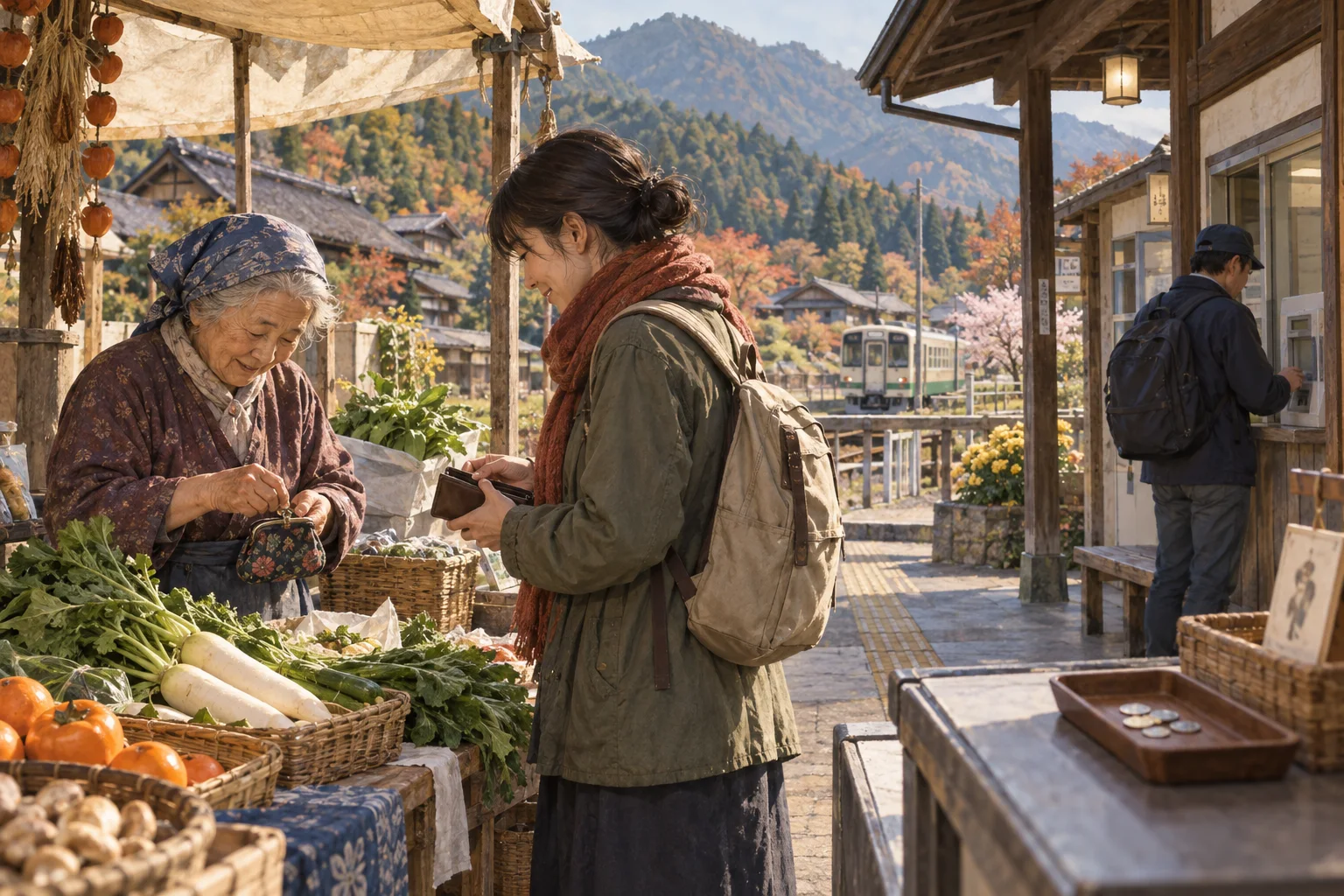
現金社会
壱In one line一言で言うと
Japan uses cash far more than comparable countries, largely because carrying cash here is safe and convenient.
弐In 30 seconds30秒で説明する
Visitors expect Japan to be cashless and find the opposite. Many small restaurants, shrines, local buses and old shops take cash only. The reasons are practical: crime is low so carrying cash is safe, ATMs are everywhere, and card fees are high for small businesses. Cashless payment is rising fast, but cash has not gone away.
参As a short speechスピーチ・英作文
Visitors arrive in Japan expecting a high-technology society and are surprised to find they need cash. Small restaurants, shrines, local buses, market stalls and long-established shops often take nothing else. There are several reasons, and the most important one is not backwardness.
Crime is low enough that carrying a significant amount of cash is genuinely safe, and if you lose your wallet there is a real chance of getting it back. ATMs are everywhere, including inside almost every convenience store, so getting cash is never a problem. Card fees are also high enough that small owner-run businesses with thin margins prefer not to accept them.
That said, the picture is changing quickly. QR-code payments and transit IC cards have spread widely, and the government has set explicit targets for raising the cashless ratio. My practical advice to a visitor is simple: carry ten thousand yen in cash at all times, and you will never be stuck.
現金社会げんきんしゃかいgenkin shakaiwhy Japan still runs on cash
現金を使う場面がまだ多い。理由の一つに、治安がよく現金を持ち歩きやすいことが挙がる。
壱一言で言うとIn one line
日本が同程度の国々よりはるかに現金を使うのは、大きくは、現金を持ち歩くことが安全で便利だからです。
弐30秒で説明するIn 30 seconds
訪日の方は日本をキャッシュレスだと思って来て、逆であることに気づきます。小さな飲食店、神社、路線バス、古い商店は現金のみのことが多いです。理由は実際的です。犯罪が少ないので現金を持ち歩いても安全で、ATMがどこにでもあり、小規模な店にはカードの手数料が重い。キャッシュレスは急速に伸びていますが、現金は消えていません。
参スピーチ・英作文As a short speech
訪日の方は、高度な技術の社会を想像して来て、現金が必要だと気づいて驚きます。小さな飲食店、神社、路線バス、市場の店、古くからの商店は、現金しか受け付けないことがよくあります。理由はいくつかあり、最も大きいのは遅れているからではありません。
まとまった現金を持ち歩いても本当に安全なほど犯罪が少なく、財布を落としても戻ってくる可能性が現実にあります。ATMはいたるところにあり、ほとんどのコンビニの中にもあるので、現金を用意することに困りません。カードの手数料も、利幅の薄い個人経営の店には重く、受け付けない理由になります。
とはいえ、状況は急速に変わっています。QRコード決済と交通系ICカードが広く普及し、政府もキャッシュレス比率の目標を掲げています。訪日の方への実際的な助言は単純です。常に一万円の現金を持っていれば、困ることはありません。
こう聞かれたらQuestions people actually ask
QWhere can I get cash?
AConvenience store ATMs, especially at Seven-Eleven and Japan Post, accept most foreign cards and operate around the clock. Bank ATMs often do not take foreign cards.
現金はどこでおろせますか。コンビニのATM、とくにセブン銀行とゆうちょ銀行は海外カードに広く対応し、24時間使えます。銀行のATMは海外カードに対応していないことも多いです。
QWhich places are most likely to be cash only?
ASmall family-run restaurants, shrines and temples, local buses outside big cities, market stalls, and older shops. Larger chains and department stores take cards without issue.
現金しか使えない可能性が高いのは、どんな場所ですか。個人経営の小さな飲食店、寺社、地方の路線バス、市場の店、古い商店です。大手チェーンや百貨店は問題なくカードが使えます。
QWhat is the IC card everyone uses?
ATransit cards like Suica and Pasmo. You top them up with cash and tap them for trains, buses, convenience stores and vending machines. For a visitor they are the single most useful thing to get.
みんなが使っているあのICカードは何ですか。SuicaやPasmoといった交通系ICカードです。現金でチャージし、電車・バス・コンビニ・自販機でタッチして使います。訪日の方が最初に用意すべきものです。
誤解されやすいA common misunderstanding
MYTHJapan is a high-tech country, so it must be cashless.日本は技術の進んだ国だからキャッシュレスに違いないと思われがちです。
FACTJapan's cashless ratio has long been below that of many comparable economies. Low crime, dense ATM coverage and high card fees for small businesses all keep cash in use.キャッシュレス比率は長く、同程度の経済圏の多くを下回ってきました。犯罪の少なさ、ATMの密度、小規模店にとってのカード手数料の重さが、現金を使い続けさせています。
そのまま使えるフレーズPhrases you can use
- Sorry, we're cash only.申し訳ありません、現金のみです。
- There's an ATM in the convenience store.コンビニにATMがあります。
- Do you take cards?カードは使えますか。
- Get a transit IC card — you'll use it everywhere.交通系ICカードを作ってください。どこでも使えます。
- Carrying cash here is genuinely safe.日本では現金を持ち歩いても本当に安全です。
豆知識Background
経済産業省の集計では、日本のキャッシュレス決済比率は2010年代前半に20%を下回っていたが、2024年には42.8%となり、政府が掲げた「2025年までに4割」の目標を前倒しで達成した。将来的には80%を目指すとしている。日本の現金流通残高は対GDP比で世界的に見ても高い水準にある。背景として、治安の良さ、ATM網の密度、偽札の少なさ、加盟店手数料の高さが挙げられる。Suicaは2001年にJR東日本が導入し、現在は交通系ICカードが全国で相互利用できる。QRコード決済は2018年ごろから大型の還元キャンペーンを通じて急速に普及した。なお神社の賽銭は現在も現金が基本だが、電子決済を導入した社寺も出ている。
出典日本文化ナビ(原田英語.com)「現金社会を英語で説明する(genkin shakai)」https://www.haradaeigo.com/japanese-culture/en/cash-society
- 文
- 日本文化ナビ編集部(原田英語.com)— 英文・和訳・解説はすべて独自に作成
- イラスト
- 日本文化ナビ オリジナル
- 発行
- 原田英語.com https://www.haradaeigo.com/
- 印刷日
- 2026.10.17
© 2026 Harada Eigo (原田英語.com). Text and illustration: Japan Culture Navi.
ページはこちら