部活
壱In one line一言で言うと
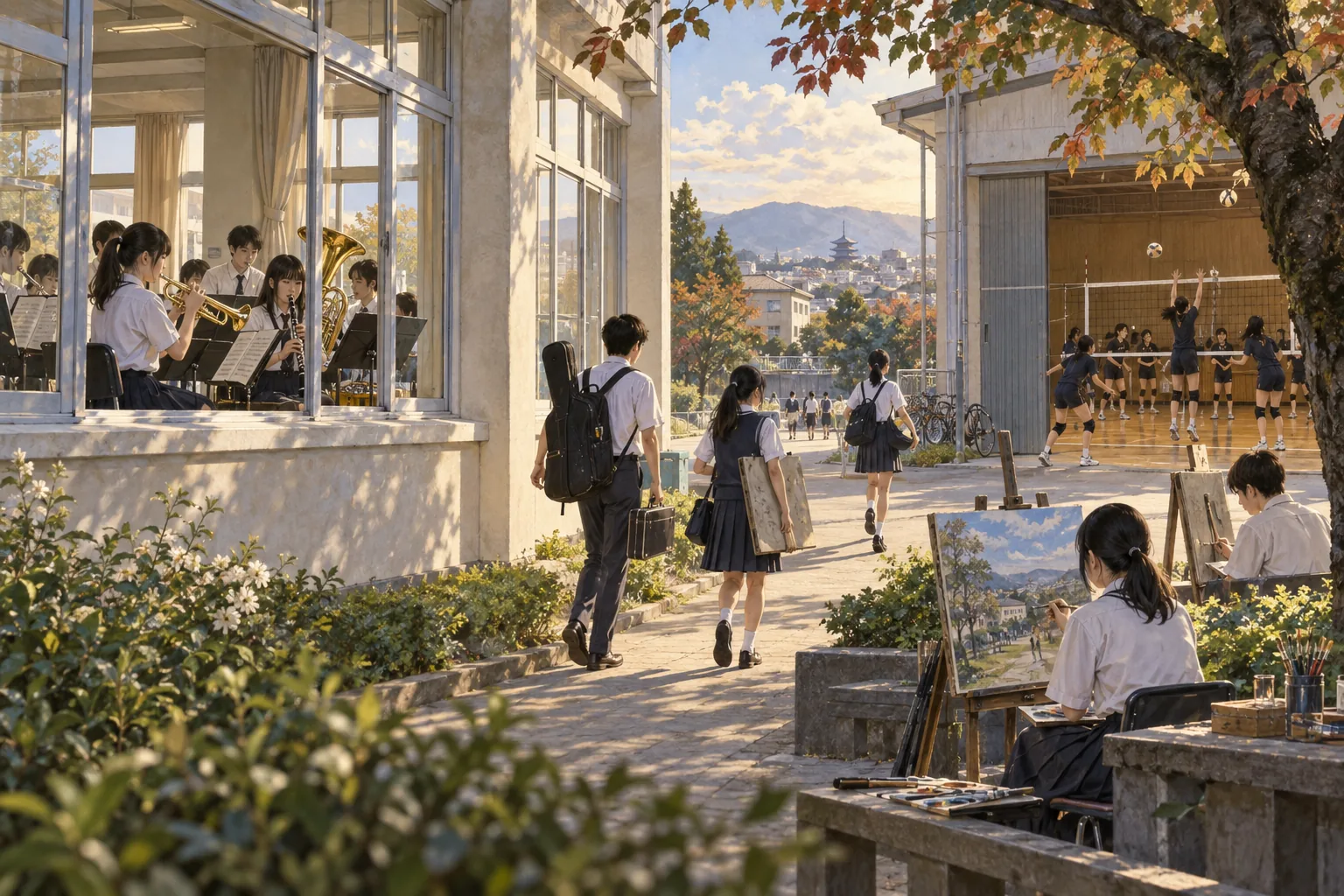
Bukatsu are school clubs, many of which meet almost every day, including weekends and holidays.
弐In 30 seconds30秒で説明する
Most Japanese students join a club, and many clubs are far more demanding than school clubs elsewhere. A sports club may practice six days a week, with morning practice before class and sessions through the summer holidays. Students usually stay in the same club for three years, and the senior-junior relationship inside it shapes much of school life.
参As a short speechスピーチ・英作文
Club activities in Japanese schools are called bukatsu, and they are not what the word club suggests in English. A student in a sports club might train six days a week, arrive an hour before class for morning practice, and keep training right through the summer holidays.
Students normally stay in the same club for all three years, and switching is uncommon. Inside the club there is a strict senior and junior relationship, and much of what Japanese people learn about hierarchy comes from here rather than from the classroom. I should be honest about the cost.
Teachers supervise clubs largely unpaid, which is a major reason Japanese teachers work some of the longest hours in the developed world, and students have very little free time. Reform is under way, with some regions moving clubs out of schools and into community organizations.
部活ぶかつbukatsuschool club activities
「放課後のクラブ」ではない。運動部なら週6日、朝練ありも珍しくない。ここが説明の勘所。
壱一言で言うとIn one line
部活とは学校のクラブのことで、休日や長期休みも含めてほぼ毎日活動する部も多くあります。
弐30秒で説明するIn 30 seconds
日本の生徒の多くが部活に入り、その活動量は他国のクラブとは比べものにならない部も少なくありません。運動部なら週6日、始業前の朝練があり、夏休み中も続きます。多くは3年間同じ部に所属し、その中の先輩・後輩の関係が学校生活の大部分を形づくります。
参スピーチ・英作文As a short speech
日本の学校のクラブ活動は部活と呼ばれ、英語の club という語から想像されるものとは違います。運動部の生徒なら週6日練習し、授業の1時間前に登校して朝練をし、夏休み中もそのまま練習を続けることがあります。
ふつう3年間同じ部に所属し、途中で変える人は多くありません。部の中には厳しい先輩・後輩の関係があり、日本人が上下関係について学ぶことの多くは、教室ではなくここで身につきます。負の面も正直に言うべきです。
教員は多くの場合ほぼ無償で顧問を務めており、これは日本の教員の労働時間が先進国でも最長の部類に入る大きな理由です。生徒の自由な時間もほとんどありません。今は改革が進み、部活を学校から地域の団体へ移す動きが各地で始まっています。
こう聞かれたらQuestions people actually ask
QCan students just quit if they don't like it?
AOfficially yes, but socially it is hard. Quitting is often seen as letting the team down, and in some schools club membership is effectively compulsory. It has become easier than it was.
いやになったら、やめてもいいのですか。制度上はやめられますが、社会的には難しいです。やめることは仲間を裏切る行為と見られがちで、実質的に加入が必須の学校もあります。昔よりは抜けやすくなりました。
QDo the teachers get paid for coaching?
AVery little. Supervising a club on weekends has historically been paid at a token rate, and this is at the center of the debate about teacher overwork in Japan.
顧問の先生に手当は出るのですか。ほとんど出ません。休日の部活指導は長く名目的な手当にとどまってきました。日本の教員の長時間労働をめぐる議論の中心にある問題です。
QIs it really that serious?
AFor sports clubs aiming at the national tournaments, yes. The national high school baseball tournament at Koshien is broadcast live to the whole country, and losing means the third-year students' club life ends that day.
そんなに本気でやるものなのですか。全国大会を目指す運動部では本当に真剣です。高校野球の甲子園は全国に生中継され、負けたその日に3年生の部活は終わります。
誤解されやすいA common misunderstanding
MYTHJapanese school clubs are a relaxed after-school hobby.日本の部活は気軽な放課後の趣味だと思われがちです。
FACTMany are closer to semi-professional training schedules, and the time demand on both students and teachers is one of the biggest issues in Japanese education today.多くは準プロ並みの練習日程に近く、生徒と教員の双方にかかる時間の負担は、今の日本の教育でもっとも大きな課題のひとつです。
そのまま使えるフレーズPhrases you can use
- Most students belong to a club.多くの生徒が部活に入っています。
- They practice before school as well.始業前にも朝練があります。
- You usually stay in the same club for three years.ふつう3年間、同じ部にいます。
- The senior-junior relationship is taken seriously.先輩・後輩の関係は真剣に守られます。
- Teachers supervise it with almost no extra pay.顧問の教員には、ほとんど手当が出ません。
豆知識Background
OECDの国際教員指導環境調査(TALIS)では、日本の中学校教員の週あたり勤務時間は参加国で最も長く、とくに課外活動に費やす時間が突出して長いことが繰り返し示されている。これを受けてスポーツ庁は2018年に運動部活動のガイドラインを示し、週2日以上の休養日、平日2時間・休日3時間程度という活動時間の目安を設けた。さらに休日の部活動を地域のクラブへ移す「地域移行」が進められている。全国高等学校野球選手権大会(夏の甲子園)は1915年に始まり、近年も地方大会には3,000を超えるチームが参加している。
出典日本文化ナビ(原田英語.com)「部活を英語で説明する(bukatsu)」https://www.haradaeigo.com/japanese-culture/en/bukatsu
- 文
- 日本文化ナビ編集部(原田英語.com)— 英文・和訳・解説はすべて独自に作成
- イラスト
- 日本文化ナビ オリジナル
- 発行
- 原田英語.com https://www.haradaeigo.com/
- 印刷日
- 2026.10.17
© 2026 Harada Eigo (原田英語.com). Text and illustration: Japan Culture Navi.
ページはこちら