忘年会
壱In one line一言で言うと
A bonenkai is a December drinking party held by a company or group to forget the year's troubles.
弐In 30 seconds30秒で説明する
Bonenkai means forget-the-year gathering. In December many workplaces, clubs and circles of friends book a restaurant or izakaya, eat a set course, drink and put the year behind them. There are toasts, sometimes speeches and games, and a second party afterward for those still standing. It is partly a thank-you from the boss and partly an obligation, and many younger workers would rather skip it.
参As a short speechスピーチ・英作文
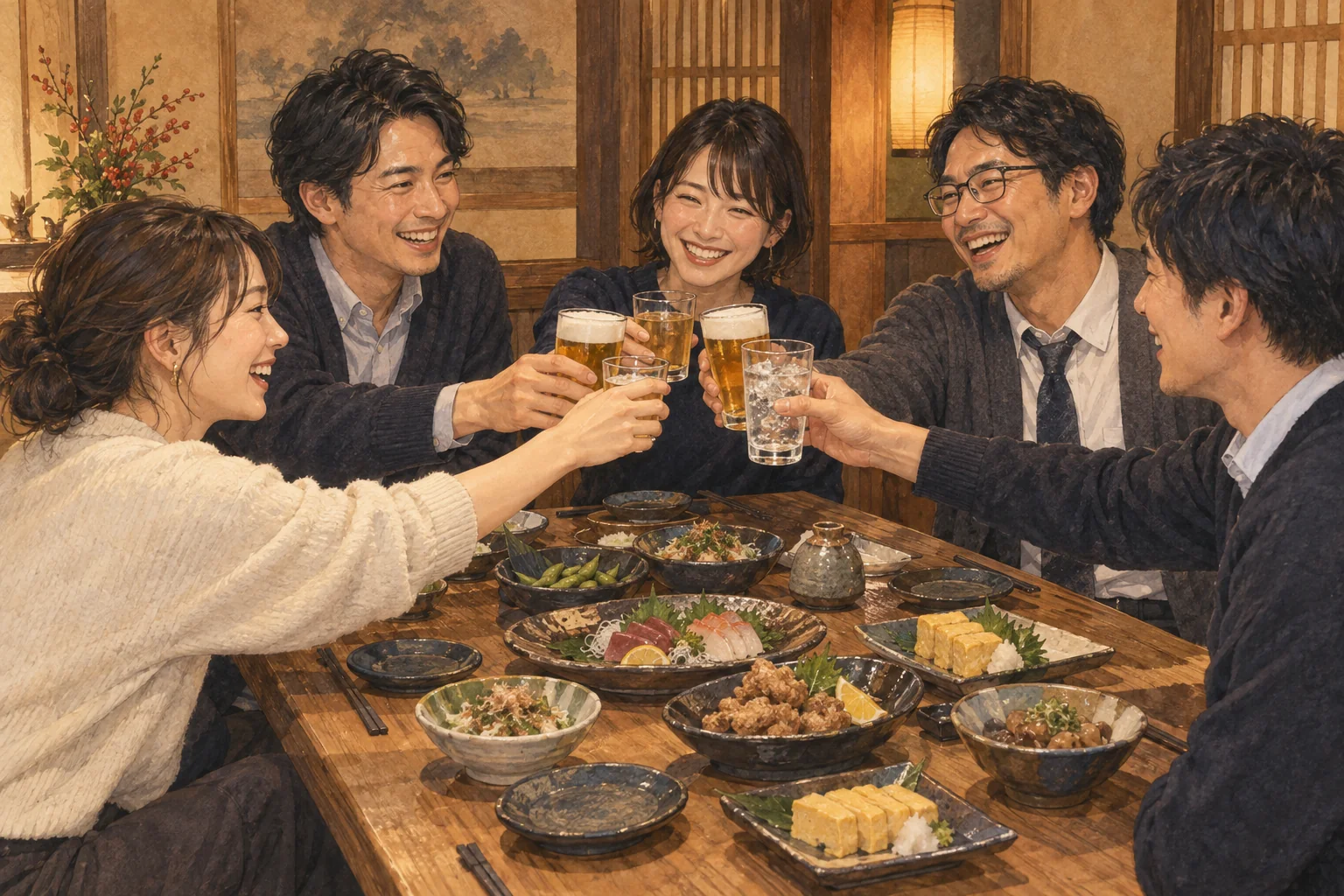
December in Japan is bonenkai season. The word means a party for forgetting the year, and the idea is to close the books on twelve months of hard work and irritation by eating and drinking together before the new year begins. Companies hold one for the whole office and often another for each department; sports teams, hobby groups and old classmates hold their own.
A typical bonenkai is a two-hour course at an izakaya with all-you-can-drink, opening with a toast by the most senior person, followed by junior staff pouring beer for their seniors, and closing with a ceremonial hand clap. Then comes the second party, usually karaoke.
Popular izakaya fill up so fast that some groups book in October. In recent years the custom has weakened: some young employees openly decline, and companies increasingly make attendance optional or hold it at lunch. I think it can be a genuinely warm evening, but only when nobody feels forced to be there.
忘年会ぼうねんかいbonenkaithe year-end party to forget the year
「年を忘れる会」。十二月の居酒屋が予約で埋まる理由と、参加をめぐる考え方の変化。
壱一言で言うとIn one line
忘年会とは、会社や仲間が十二月に開く、その年の苦労を忘れるための宴会です。
弐30秒で説明するIn 30 seconds
忘年会は「年を忘れる会」という意味です。十二月には多くの職場、クラブ、友人の集まりが料理店や居酒屋を予約し、コース料理を食べ、飲んで、その年を後にします。乾杯があり、ときにスピーチや余興があり、まだ立っていられる人のための二次会が続きます。上司からの慰労であると同時に義務でもあり、若い社員の多くはできれば欠席したいと思っています。
参スピーチ・英作文As a short speech
日本の十二月は忘年会の季節です。この言葉は「年を忘れる会」という意味で、新年が始まる前に一緒に食べて飲み、十二か月の苦労と苛立ちに区切りをつけようという趣旨です。会社は職場全体で一回、さらに部署ごとにもう一回開くことが多く、運動のチーム、趣味の会、昔の同級生もそれぞれに開きます。
典型的な忘年会は居酒屋での飲み放題つき二時間のコースで、いちばん偉い人の乾杯で始まり、若手が先輩にビールを注ぎ、手締めで終わります。そして二次会、たいていカラオケです。人気の居酒屋はすぐに埋まるので、十月に予約する団体もあります。
近年この習慣は弱まっていて、若い社員の中には公然と断る人もおり、会社も参加を任意にしたり昼に開いたりすることが増えています。本当に温かい夜になりうると思いますが、それは誰も無理に来させられていないときだけです。
こう聞かれたらQuestions people actually ask
QIs it rude to skip my company's bonenkai?
ALess than it used to be, but it is still noticed, especially if you are new. If you want to go home early, attend the first party and leave before the second; most people will not mind. If you cannot attend at all, tell your boss in advance rather than just not showing up.
会社の忘年会を断るのは失礼ですか。以前ほどではありませんが、特に新人なら今も気づかれます。早く帰りたければ一次会に出て二次会の前に抜ければ、たいていの人は気にしません。まったく出られないなら、黙って来ないのではなく事前に上司に伝えてください。
QDo I have to drink?
ANo. Say you are not drinking tonight, order oolong tea, and keep your glass full so people stop trying to fill it. Refusing alcohol is far more accepted than a decade ago, and pressuring people to drink is now recognized as harassment.
お酒を飲まなければいけませんか。いいえ。今夜は飲まないと言ってウーロン茶を頼み、注がれないようにグラスを満たしておきましょう。酒を断ることは十年前よりずっと受け入れられていて、飲酒の強要は今ではハラスメントと認識されています。
QWho pays?
AIt depends. Many companies subsidize part of the cost, and the rest is split evenly, often with senior staff paying more. Among friends it is usually split. Expect to hand over a fixed amount collected by the organizer rather than paying the restaurant yourself.
誰が払うのですか。場合によります。多くの会社は費用の一部を補助し、残りは均等に割り、上の人が多めに出すことも多いです。友人同士ならふつう割り勘です。店に直接払うのではなく、幹事が集める決まった額を渡す形が一般的です。
誤解されやすいA common misunderstanding
MYTHA bonenkai is the Japanese version of a Christmas party.忘年会は日本版のクリスマスパーティーだ、と思われがちです。
FACTIt has no religious or family side at all; it is a work or group ritual for closing the year, and one person may attend four or five in a single December.宗教や家族の要素はまったくなく、職場や仲間で年を締める行事です。一人が十二月に四つも五つも出ることがあります。
そのまま使えるフレーズPhrases you can use
- Our year-end party is on the twentieth. Can you make it?忘年会は20日です。来られますか。
- I'll come to the first party but skip the second.一次会は出ますが、二次会は失礼します。
- I'm not drinking tonight, just oolong tea.今夜は飲みません。ウーロン茶だけで。
- The restaurants are all booked up in December.十二月はどの店も予約でいっぱいです。
- Let's put this year behind us.今年のことは忘れましょう。
豆知識Background
忘年会の起源は室町時代の「年忘れ」と呼ばれる連歌の会にさかのぼるという説がありますが、庶民の飲み会として広まったのは明治以降とされます。年明けには同じ顔ぶれで「新年会」を開くことも多く、十二月と一月は飲食店の書き入れ時です。幹事は若手の仕事とされることが多く、店の予約、出欠の集計、席順、余興の手配まで任されます。宴の締めには「三本締め」や「一本締め」と呼ばれる手拍子を打つ習慣があり、外国人には説明しないと分からない場面の一つです。近年は「忘年会スルー」という言葉が生まれるなど参加を義務と感じない若い世代が増え、昼開催、短時間、家族同伴など形も多様になっています。
出典日本文化ナビ(原田英語.com)「忘年会を英語で説明する(bonenkai)」https://www.haradaeigo.com/japanese-culture/en/bonenkai
- 文
- 日本文化ナビ編集部(原田英語.com)— 英文・和訳・解説はすべて独自に作成
- イラスト
- 日本文化ナビ オリジナル
- 発行
- 原田英語.com https://www.haradaeigo.com/
- 印刷日
- 2026.10.17
© 2026 Harada Eigo (原田英語.com). Text and illustration: Japan Culture Navi.
ページはこちら