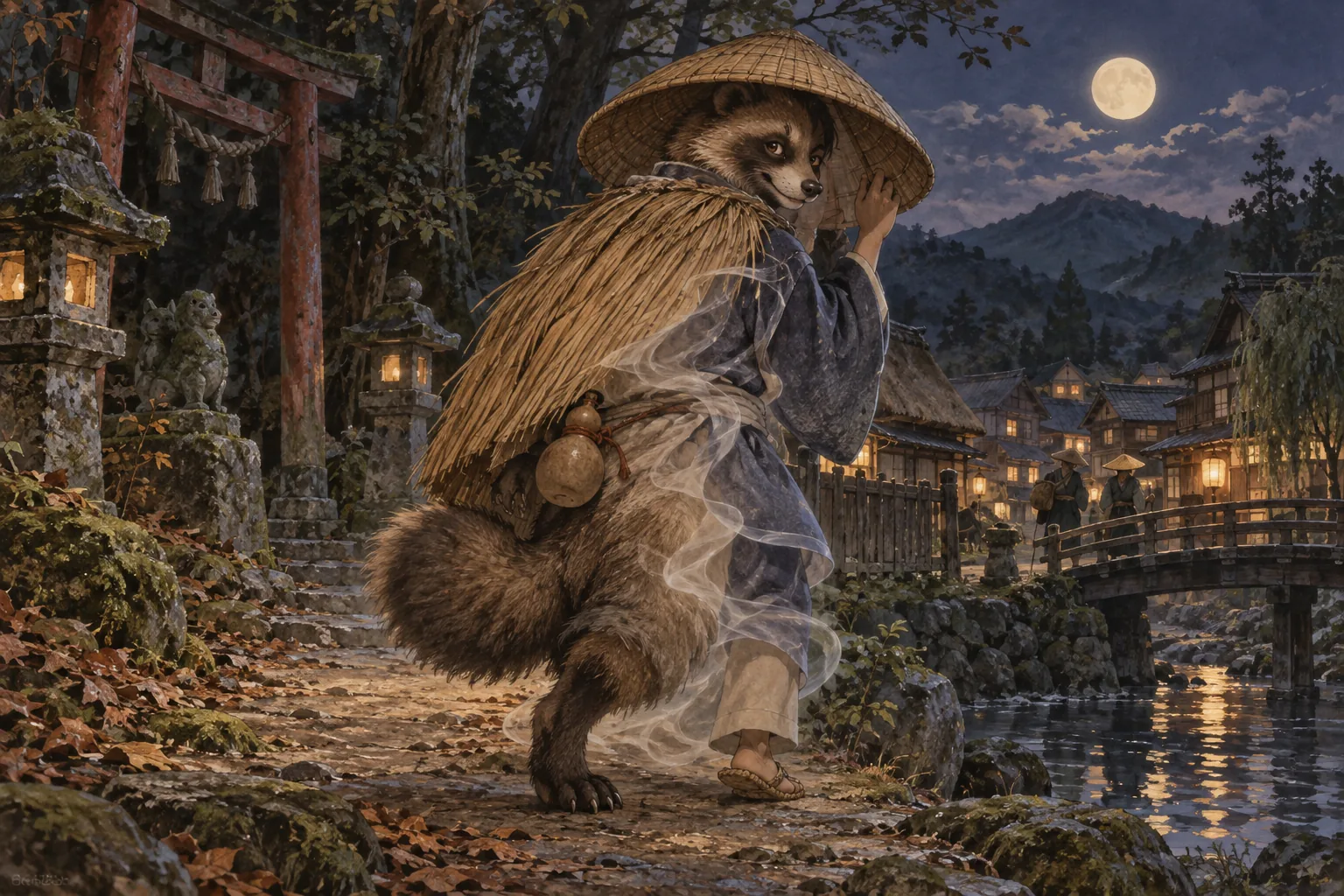
化け狸
壱In one line一言で言うと
Bakedanuki, the shape-shifting raccoon dog, is a real animal that folklore made a comic trickster, now a shop-front charm.
弐In 30 seconds30秒で説明する
The tanuki is a real Japanese animal, a raccoon dog, and in folklore a creature that changes shape to trick people, usually for fun rather than harm. Ceramic tanuki stand outside restaurants and shops holding a sake flask and an account book, each part of the figure standing for a wish.
参As a short speechスピーチ・英作文
The tanuki is an actual animal, a raccoon dog, and English translations calling it a badger have caused a century of confusion. In folklore it shape-shifts, like the fox, but the character is completely different. Where fox stories are about deception with an edge of menace, tanuki stories are comic: a tanuki turns a leaf into money, disguises itself as a teapot, or drums on its own belly at night to lure travelers off the path, and usually comes off worse in the end.
The ceramic figures outside restaurants come from this. Each element is a pun or a wish: the big straw hat wards off trouble, the sake flask stands for virtue, the ledger in the other hand for trust, the large eyes for seeing the situation clearly, the big belly for calm decisiveness, and the exaggerated testicles, which startle visitors, for financial luck, because gold leaf is said to have once been beaten wrapped in tanuki skin.
化け狸ばけだぬきbakedanukithe shape-shifting raccoon dog
店先のあの置物。腹を叩き、徳利と通帳を持っている。理由がある。
壱一言で言うとIn one line
化け狸とは、実在する狸を民話が滑稽な化け物に仕立てたもので、今では店先の縁起物になっています。
弐30秒で説明するIn 30 seconds
狸は実在する日本の動物で、民話では人を化かす生き物として現れます。害をなすためというより、ふざけてすることが多くあります。陶器の狸は徳利と通い帳を持って飲食店や商店の前に立ち、その体の各部分がそれぞれ願いを表しています。
参スピーチ・英作文As a short speech
狸は実在する動物で、英語ではタヌキを badger と訳したことが一世紀にわたる混乱を生みました。民話では狐と同じく姿を変えますが、性格はまったく違います。狐の話が凄みを帯びた欺きの話であるのに対し、狸の話は滑稽です。
木の葉を金に変え、茶釜に化け、夜に自分の腹を叩いて旅人を道から誘い、たいていは最後に自分がひどい目に遭います。飲食店の前の陶器の像はここから来ています。それぞれの部分が語呂合わせか願いです。
大きな笠は災難を避け、徳利は人徳を、もう一方の手の通い帳は信用を、大きな目は周りをよく見ることを、太い腹は落ち着いた決断を表します。訪れた人を驚かせる誇張された金玉は金運のしるしで、かつて金箔を打つときに狸の皮で包んだことに由来するといわれます。
こう聞かれたらQuestions people actually ask
QIs it a raccoon or a badger?
ANeither. It is a raccoon dog, a canid native to East Asia, unrelated to the American raccoon and not a badger either. Older English translations of Japanese folk tales used badger, which is where the confusion started.
あれはアライグマですか、アナグマですか。どちらでもありません。東アジアに生息するイヌ科の動物で、アメリカのアライグマとは別の系統ですし、アナグマでもありません。日本の民話の古い英訳が badger を使ったことが、混乱の始まりです。
QWhy does the statue look like that?
AEvery feature is a charm. Hat against misfortune, flask for virtue, ledger for trust, big eyes for judgment, big belly for calm, and the famous exaggerated feature for money luck, said to come from goldbeating with tanuki skin. It is a wish list, not a joke.
どうしてあんな姿をしているのですか。どの部分も縁起物です。笠は災難除け、徳利は人徳、通い帳は信用、大きな目は判断、太い腹は落ち着き、そしてあの有名な誇張は金運で、狸の皮で金箔を打ったことに由来するといわれます。冗談ではなく願いの一覧です。
そのまま使えるフレーズPhrases you can use
- It's a raccoon dog, not a raccoon.アライグマではなくタヌキです。
- In stories it changes shape to play tricks.話の中では化けて人をからかいます。
- Every part of the statue means something.置物のどの部分にも意味があります。
- The big hat wards off trouble.大きな笠は災難除けです。
豆知識Background
陶器の狸は滋賀県の信楽焼が知られ、昭和天皇が信楽を訪れた際に沿道に並べられたことで全国に広まったと伝えられます。「狸寝入り」は眠ったふりをすること、「同じ穴の狢」は仲間であることを指す言い回しです。民話では『分福茶釜』『かちかち山』が有名で、いずれも狸が化けます。実際のタヌキは都市部にも生息しており、東京の住宅地でも目撃されます。英語では今 raccoon dog と訳すのが一般的です。
出典日本文化ナビ(原田英語.com)「化け狸を英語で説明する(bakedanuki)」https://www.haradaeigo.com/japanese-culture/en/bakedanuki
- 文
- 日本文化ナビ編集部(原田英語.com)— 英文・和訳・解説はすべて独自に作成
- イラスト
- 日本文化ナビ オリジナル
- 発行
- 原田英語.com https://www.haradaeigo.com/
- 印刷日
- 2026.10.17
© 2026 Harada Eigo (原田英語.com). Text and illustration: Japan Culture Navi.
ページはこちら