熱い風呂を好む文化
壱In one line一言で言うと
Many Japanese baths and onsen run noticeably hotter than baths in most other countries, and lukewarm water draws complaints, not relief.
弐In 30 seconds30秒で説明する
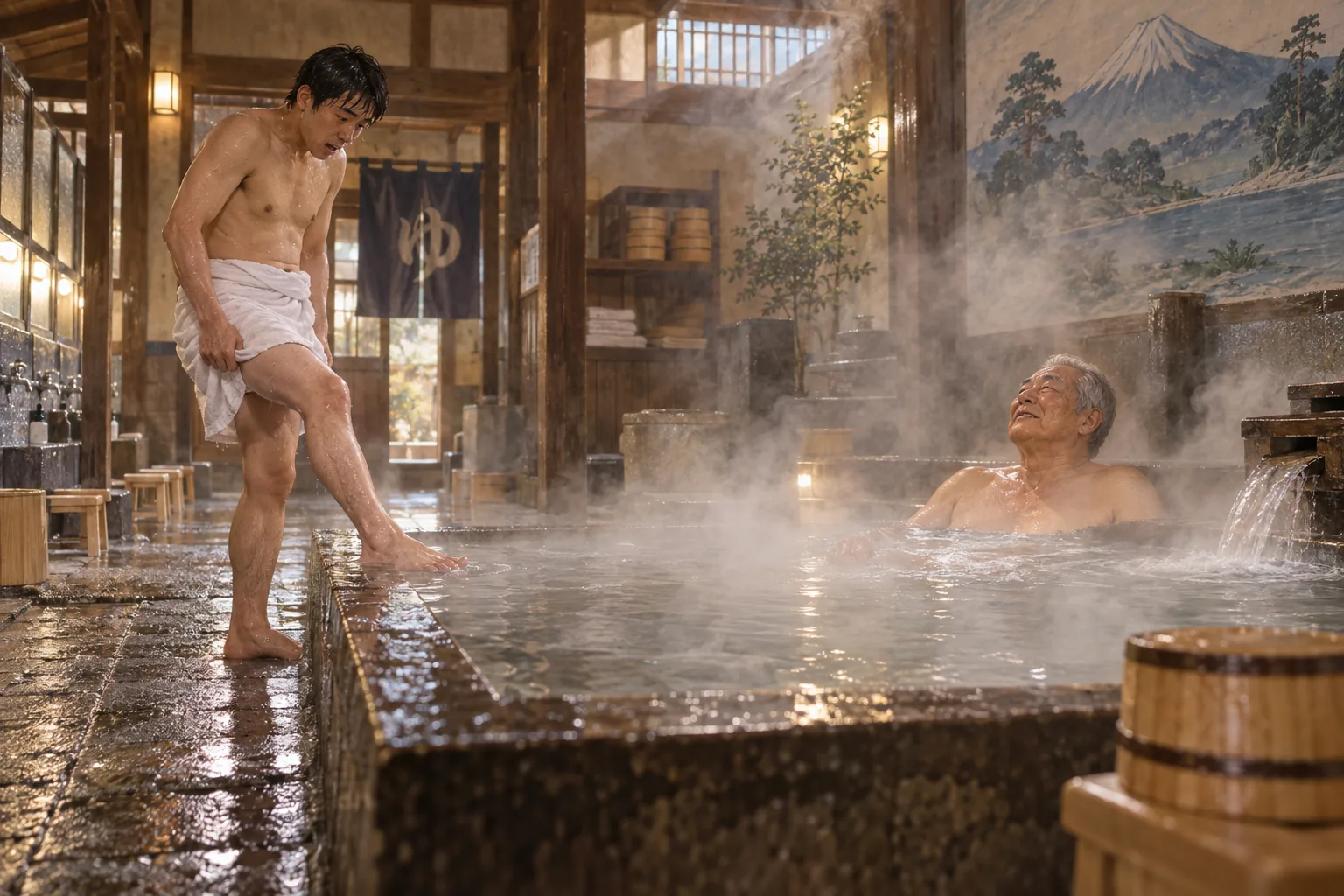
A home bath or public bath in Japan is often kept around 40 to 42 degrees Celsius, hotter than the 36 to 38 degrees many countries consider a comfortable soak, and some hot spring baths run several degrees hotter still. The preference isn't accidental: a hot bath is associated with relaxation, better sleep and improved circulation, and a bath described as nurui, lukewarm, is a mild complaint rather than a compliment. First-time visitors sometimes find the temperature closer to uncomfortable than relaxing, and easing in slowly, feet first, is the normal way to manage it.
参As a short speechスピーチ・英作文
Ask a Japanese person what temperature makes a good bath, and the answer is usually hotter than most non-Japanese guests expect: somewhere around 40 to 42 degrees Celsius at home, and hot springs are often kept even warmer, sometimes past 43. This isn't a random quirk.
A hot bath is treated as functional, believed to relax muscles, help you sleep, and improve circulation after a long day, and the ritual of soaking, not just washing, is built around that heat. Calling a bath nurui, lukewarm, is a genuine complaint in Japan, closer to saying a meal came out cold, while a bath described as atsui, hot, is simply doing its job.
Some hot springs lean even further into this with famously scalding water, managed with wooden paddles used to slowly stir and cool the surface before bathers step in, a ritual built around approaching heat that would otherwise be unbearable. For a visitor used to a lukewarm soak, the trick is patience: ease in feet first, sit at the edge if the heat is too much at once, and let your body adjust rather than getting straight in or out.
熱い風呂を好む文化あついふろをこのむぶんかatsui furo o konomu bunkathe Japanese taste for baths hotter than most visitors expect
ぬるいと文句が出る。42度でも「熱め」とは言われないことがある。
壱一言で言うとIn one line
日本の風呂や温泉は他の多くの国より熱めに保たれていることが多く、ぬるいと不満が出ます。
弐30秒で説明するIn 30 seconds
日本の家庭や銭湯の風呂は40〜42度前後に保たれることが多く、これは多くの国で快適とされる36〜38度よりかなり高めです。温泉ではさらに数度熱いこともあります。この好みは偶然ではなく、熱い風呂はリラックスや快眠、血行の改善と結びつけられており、ぬるいと言われることは褒め言葉ではなく軽い不満とされます。初めて入る外国人には、リラックスというより不快に近く感じられることもあり、足先からゆっくり入るのが一般的な対処法です。
参スピーチ・英作文As a short speech
日本人に良い風呂の温度を尋ねると、たいてい外国人のお客さんが思うより熱い答えが返ってきます。家庭の風呂ならだいたい40〜42度前後、温泉ではさらに熱く、43度を超えることさえあります。これは気まぐれではありません。
熱い風呂は機能的なものとして扱われ、筋肉をほぐし、よく眠れるようにし、一日の終わりに血行を良くすると信じられており、ただ体を洗うのではなく湯につかるという儀式そのものが、その熱さを前提に作られています。日本で風呂を「ぬるい」と言うのは、料理が冷めていたと言うのに近い、正真正銘の不満であり、「熱い」と言われる風呂は、正しく役目を果たしているだけということになります。
一部の温泉はこの傾向をさらに推し進め、名物のように熱い湯を、木の板でゆっくりかき混ぜて表面を冷ましてから客を入れる「湯もみ」という所作を用意しており、本来なら耐えがたい熱さに近づくための、丸ごと一つの儀式になっています。ぬるめの風呂に慣れた旅行者にとってのコツは辛抱です。足から少しずつ入り、熱すぎるなら縁に腰かけ、すぐに全身を入れたりすぐに出たりせず、体が慣れるのを待つことです。
こう聞かれたらQuestions people actually ask
QIs it actually safe to sit in water that hot?
AFor a healthy adult, a short soak is generally fine, but staying in too long, especially after drinking alcohol or if you have heart or blood pressure issues, is genuinely risky, which is why long soaking is usually done in short sessions with breaks.
そんなに熱いお湯に入るのは実際に安全なのですか。健康な大人であれば短時間ならふつう問題ありませんが、特に飲酒後や心臓・血圧に不安がある人が長く入り続けるのは実際に危険です。そのため長湯は、休憩を挟んだ短いセッションに分けて行われることが多いです。
QCan I ask for the water to be cooled down?
AAt a private home bath, sure, but a shared onsen or public bath is kept at one temperature for everyone, so if it's too hot for you, the accepted move is to sit at the edge or step out and back in rather than change the water.
お湯を少しぬるくしてもらうことはできますか。家庭の風呂ならもちろん可能です。しかし共同の温泉や銭湯は全員のために一定の温度に保たれているので、熱すぎる場合はお湯を変えてもらうのではなく、縁に座ったり出たり入ったりして調整するのが受け入れられているやり方です。
QWhy do some hot springs feel even hotter than a home bath?
ANatural hot spring water often comes out of the ground already very hot and isn't always diluted much before it reaches the bath, especially in famous high-temperature springs, some of which are cooled with wooden paddles before bathers enter.
なぜ温泉は家庭の風呂よりさらに熱く感じることがあるのですか。天然の温泉水は地中からすでに非常に熱い状態で湧き出ており、湯船に届くまでにあまり薄められないことがあります。特に高温で知られる源泉ではその傾向が強く、木の板で冷ましてから客を入れる温泉もあります。
誤解されやすいA common misunderstanding
MYTHA relaxing bath should feel warm, not hot.リラックスできる風呂は、熱いのではなく温かい程度がいいと思われがちです。
FACTIn Japan, a bath around body temperature or slightly above is often described as nurui, lukewarm, and mildly disappointing, while a properly relaxing bath is expected to feel distinctly hot.実際の日本では、体温に近い程度のお湯は「ぬるい」と表現され、やや物足りないものとされます。本当にリラックスできる風呂は、はっきりと熱く感じるものだと期待されています。
そのまま使えるフレーズPhrases you can use
- This water is a little too hot for me.このお湯は私には少し熱いです。
- Ease in slowly, feet first.足からゆっくり入ってください。
- The bath felt lukewarm to me.私にはお湯がぬるく感じました。
- Don't stay in too long if it's this hot.熱いので長湯はしないでください。
- They cool the water with wooden paddles here.ここでは木の板でお湯をかき混ぜて冷まします。
豆知識Background
家庭の風呂は40〜42度前後に設定されることが多く、欧米で快適とされる36〜38度よりかなり高い。銭湯や温泉ではさらに熱く、44度を超える湯を売りにする施設もある。群馬県の草津温泉には、高温の源泉を薄めずに人力で混ぜて冷ます「湯もみ」という伝統的な作業があり、観光客向けのショーとしても行われている。熱い風呂は血行を促し疲れを取るとされる一方、飲酒後や高血圧の人には長湯がリスクになるため、こまめに湯から上がることが勧められている。
出典日本文化ナビ(原田英語.com)「熱い風呂を好む文化を英語で説明する(atsui furo o konomu bunka)」https://www.haradaeigo.com/japanese-culture/en/atsuburo
- 文
- 日本文化ナビ編集部(原田英語.com)— 英文・和訳・解説はすべて独自に作成
- イラスト
- 日本文化ナビ オリジナル
- 発行
- 原田英語.com https://www.haradaeigo.com/
- 印刷日
- 2026.10.17
© 2026 Harada Eigo (原田英語.com). Text and illustration: Japan Culture Navi.
ページはこちら