電話の受け方
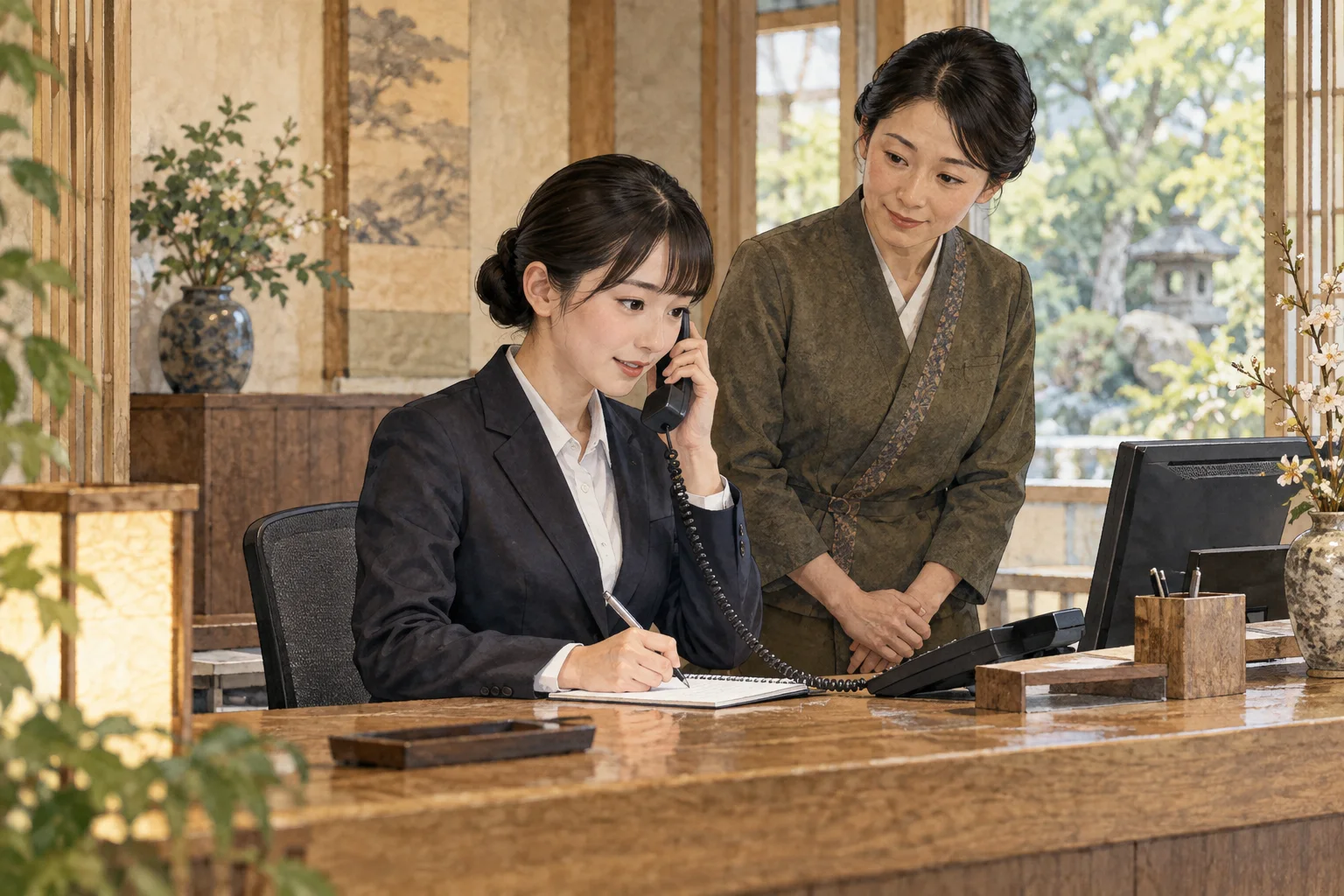
壱In one line一言で言うと
Denwa no ukekata, or answering the phone, is a scripted skill at Japanese companies, including dropping honorifics for in-house colleagues.
弐In 30 seconds30秒で説明する
New employees in Japan are trained in phone manners before almost anything else. Pick up within three rings, say your company name rather than hello, take notes, repeat the caller's name and number back, and end by letting the caller hang up first. The rule that catches foreigners is honorifics: when speaking to someone outside your company, you refer to your own boss without any honorific title at all.
参As a short speechスピーチ・英作文
Phone manners are the first thing a new employee in Japan is drilled in, and they are more codified than most visitors expect. You answer within three rings; if it takes longer you apologize for keeping the caller waiting. You do not say the Japanese equivalent of hello; you give your company name and your own.
You write down the caller's company, name and number as they speak, then read them back to confirm. If you transfer the call you put it on hold rather than covering the mouthpiece, and you let the caller hang up first. The part that trips up learners is the honorific system. Inside your company you call your boss by title with respect.
The moment you are speaking to someone outside, your company becomes the inside group and the caller the outside, so you refer to that same boss with no honorific at all, using only the surname. Getting this backwards sounds strange in a way that is hard to explain but immediately noticeable, which is why companies drill it.
電話の受け方でんわのうけかたdenwa no ukekataphone manners at a Japanese company
三回以内に取り、社名を名乗り、自分の会社の上司には敬語を使わない。新人が最初に躓く壁。
壱一言で言うとIn one line
電話の受け方とは、自分の会社の人に敬語を使わないことも含む、日本の会社での電話応対の型です。
弐30秒で説明するIn 30 seconds
日本の新入社員は、ほとんど何よりも先に電話応対を教わります。三回以内に取り、もしもしではなく社名を名乗り、メモを取り、相手の名前と番号を復唱し、相手が切ってから受話器を置きます。外国人が引っかかるのは敬語の決まりです。社外の人と話すときは、自分の会社の上司を敬称なしで呼びます。
参スピーチ・英作文As a short speech
電話応対は、日本の新入社員が最初に叩き込まれることで、多くの外国人が思うよりずっと型が決まっています。三回以内に取り、それより遅れたら待たせたことを詫びます。もしもしとは言わず、社名と自分の名前を名乗ります。
相手の会社名、名前、番号を聞きながら書き取り、復唱して確かめます。取り次ぐときは送話口を手で押さえるのではなく保留にし、相手が切ってから受話器を置きます。学ぶ人が転ぶのは敬語の仕組みです。社内では上司を役職で呼び、敬意を払います。
社外の相手と話した瞬間、自分の会社が内、相手が外になるので、その同じ上司を敬称なしの姓だけで呼びます。これを逆にすると、説明しにくいけれどすぐ分かる形で変に響きます。だから会社は繰り返し練習させるのです。
こう聞かれたらQuestions people actually ask
QWhy do I call my own boss without any title?
ABecause the inside and outside distinction outranks seniority. Speaking to someone outside your company, your whole company is the inside group, so you humble everyone in it, including your president. Adding a respectful title to your own boss in that conversation raises your side above the customer.
どうして自分の上司を呼び捨てにするのですか。内と外の区別が上下関係より優先するからです。社外の人と話すとき、自分の会社全体が内側になるので、社長まで含めて身内として謙譲します。その会話で自分の上司に敬称をつけると、自分の側を相手より上に置くことになります。
QWhat do I say if the person is out?
ASay they are away from their desk or out of the office, state when they are expected back if you know, and offer to take a message or to have them call back. Take the caller's name and number even if they say it is not necessary, and repeat it back.
相手が不在のときは何と言えばいいですか。席を外している、あるいは外出していると伝え、戻る予定が分かればそれを言い、伝言を承るか折り返すことを申し出ます。不要と言われても相手の名前と番号を聞いて復唱してください。
QDoes anyone still use the office phone?
ALess than before, and younger employees often dislike it, to the point that phone anxiety has become a discussed workplace issue. But it survives in sales, in dealing with older clients and in government offices, so the training continues even at companies that mostly use chat and email.
いまも固定電話を使っているのですか。以前より減っていて、若い社員は苦手とすることが多く、電話に出るのが怖いという話題が職場の問題として語られるほどです。それでも営業、年配の取引先とのやり取り、役所では生きているので、ふだんはチャットとメールの会社でも研修は続いています。
そのまま使えるフレーズPhrases you can use
- Thank you for calling. This is Tanaka at Sakura Trading.お電話ありがとうございます。さくら商事の田中でございます。
- I'm sorry to have kept you waiting.お待たせいたしました。
- May I ask who's calling, please?恐れ入りますが、お名前をうかがえますか。
- I'm afraid he's away from his desk at the moment.あいにく席を外しております。
- Let me repeat that back to you.復唱いたします。
- Shall I have him call you back?折り返しお電話いたしましょうか。
豆知識Background
電話応対は新入社員研修の定番で、三コール以内に出る、社名と名乗りを言う、相手の情報を復唱する、相手が切るのを待つ、といった型が教えられます。社外の相手に対して自社の上司を「田中は席を外しております」と敬称なしで言うのは、話し相手を外、自分の会社を内と捉えるウチとソトの考え方に基づく敬語の運用で、外国人だけでなく日本人の新人もよく間違えます。近年はメールやチャットが主な連絡手段になり、固定電話に出ることへの苦手意識を「電話恐怖症」と呼んで話題にすることが増えました。一方で、営業や年配の取引先、官公庁とのやり取りでは今も電話が使われ、研修の項目として残っています。会社によっては、固定電話を廃して個人の携帯やクラウドの電話に切り替える例もあります。
出典日本文化ナビ(原田英語.com)「電話の受け方を英語で説明する(denwa no ukekata)」https://www.haradaeigo.com/japanese-culture/en/answering-the-phone
- 文
- 日本文化ナビ編集部(原田英語.com)— 英文・和訳・解説はすべて独自に作成
- イラスト
- 日本文化ナビ オリジナル
- 発行
- 原田英語.com https://www.haradaeigo.com/
- 印刷日
- 2026.10.17
© 2026 Harada Eigo (原田英語.com). Text and illustration: Japan Culture Navi.
ページはこちら