あんぱん
壱In one line一言で言うと
Anpan is a soft bread roll filled with sweet red bean paste, created in 1874 to suit Japanese tastes.
弐In 30 seconds30秒で説明する
When bread arrived in Meiji-era Japan it did not sell; people had rice and saw no reason for it. In 1874 a Tokyo bakery solved the problem by leavening the dough with the rice-and-koji starter used for sake-yeast buns and filling it with sweet azuki paste — familiar filling, unfamiliar bread. It worked, and anpan is still sold in almost every convenience store in Japan.
参As a short speechスピーチ・英作文
Anpan is a big part of the reason Japan eats bread, and the story is specific enough to be worth telling. When Western bread came to Japan in the Meiji period, it did not catch on. People already had rice, bread was dry and unfamiliar, and the yeast used to raise it produced a smell Japanese palates disliked.
In 1874 a bakery in Tokyo, run by a former samurai who had lost his livelihood after the Meiji Restoration, solved both problems at once. Instead of European yeast, he used the rice-and-koji starter that had long been used for sake-yeast steamed buns, which gave a softer, slightly sweet dough. And instead of leaving it plain, he filled it with sweet azuki bean paste, which people already knew from wagashi.
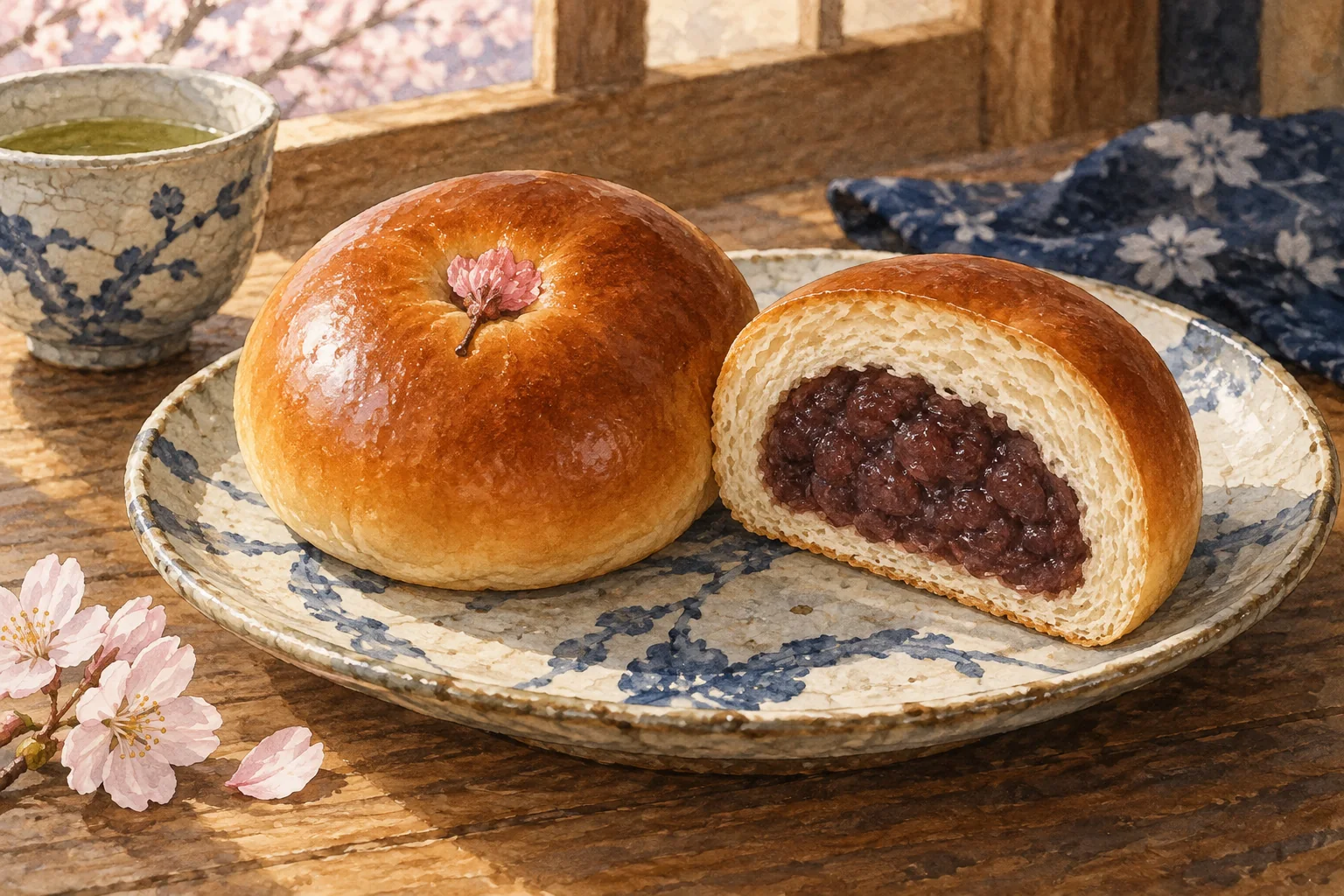
The result was bread you did not have to learn to like. It was presented to the Meiji emperor the following year with a salted cherry blossom pressed into the top, which is still how the classic version looks. Many of Japan's sweet breads descend from that idea: take the Western form, put something familiar inside.
あんぱんあんぱんanpanthe sweet bean bun that made bread Japanese
1874年、パン屋が酒饅頭の生地を使って作った。パンが広まるきっかけの一つになった。
壱一言で言うとIn one line
あんぱんとは、小豆の餡を包んだ柔らかいパンで、1874年に西洋のパンを日本人の口に合わせるために作られたものです。
弐30秒で説明するIn 30 seconds
明治になってパンが入ってきたとき、売れませんでした。米があるのに、わざわざ食べる理由がなかったからです。1874年、東京のパン屋がこれを解いた。酒饅頭に使う米と麹の種で生地を膨らませ、中に小豆の餡を入れたのです。中身は知っているもの、外側は知らないもの。これが当たりました。あんぱんはいまも、日本のほとんどのコンビニにあります。
参スピーチ・英作文As a short speech
日本人がパンを食べるようになった大きなきっかけは、あんぱんです。その経緯ははっきりしていて、話す値打ちがあります。明治に西洋のパンが入ってきたとき、これは広まりませんでした。米があり、パンは乾いていて馴染みがなく、膨らませる酵母の匂いも日本人の口には合いませんでした。
1874年、東京のパン屋がこの両方を一度に解きます。営んでいたのは、明治維新で職を失った元武士でした。ヨーロッパの酵母のかわりに、酒饅頭に古くから使われてきた米と麹の種を使う。生地は柔らかく、ほのかに甘くなります。そして素のままにせず、小豆の餡を詰めた。
餡なら、和菓子で誰もが知っています。こうしてできたのが、好きになる練習が要らないパンでした。翌年には、上に桜の塩漬けを押し込んだものが明治天皇に献上され、いまの定番の形もそれです。日本の菓子パンの多くは、この発想の子孫です。西洋の形を借りて、中に知っているものを入れる。
こう聞かれたらQuestions people actually ask
QWhy is there a flower on top?
AA salted cherry blossom. It was added when the bun was presented to the emperor in 1875, and the classic version has kept it ever since.
上にのっている花は何ですか。桜の塩漬けです。1875年に天皇へ献上した際に付けられたもので、定番の形にはいまも残っています。
QIs the filling always red bean?
ATraditionally yes, smooth or coarse. Convenience stores now also sell white bean, chestnut, custard and whipped cream versions under the same logic.
中身はいつも小豆ですか。伝統的にはそうで、こしあんと粒あんがあります。いまのコンビニには、同じ発想で白餡、栗、カスタード、生クリームのものもあります。
QIs it a dessert?
AIt sits between. Japanese people eat it as breakfast, as a snack or as a quick lunch, and it is sold in bakeries and convenience stores rather than confectioners.
菓子ですか。その中間です。朝食にも、間食にも、手早い昼にもなります。売っているのは菓子屋ではなく、パン屋とコンビニです。
誤解されやすいA common misunderstanding
MYTHBread was simply imported into Japan and accepted.パンはそのまま日本に入って受け入れられた、と思われがちです。
FACTIt did not sell at first. It took a bun leavened with a rice starter and filled with bean paste to make bread something Japanese households would buy.最初は売れませんでした。米の種で膨らませ、餡を入れたパンが出て、ようやく家庭が買うものになりました。
そのまま使えるフレーズPhrases you can use
- It's a bread roll filled with sweet bean paste.餡の入ったパンです。
- It was invented in 1874 to make bread sell.パンを売るために1874年に作られました。
- The original was raised with a sake starter, not baker's yeast.元祖は、パン酵母ではなく酒種で膨らませました。
- The flower on top is a salted cherry blossom.上にあるのは桜の塩漬けです。
- Almost every convenience store sells one.たいていのコンビニにあります。
豆知識Background
あんぱんは1874年(明治7年)、東京・銀座の木村屋(現・木村屋總本店)で木村安兵衛・英三郎父子が考案したとされる。酒饅頭に用いる酒種で生地を発酵させたことが特徴で、1875年に向島で明治天皇に献上された際、桜の塩漬けを中央に埋めた形が用いられた。木村安兵衛は常陸国の武士の出で、明治維新で職を失ったのちにパン屋を開いている。ジャムパン、クリームパンも同じ流れのなかで生まれた。
出典日本文化ナビ(原田英語.com)「あんぱんを英語で説明する(anpan)」https://www.haradaeigo.com/japanese-culture/en/anpan
- 文
- 日本文化ナビ編集部(原田英語.com)— 英文・和訳・解説はすべて独自に作成
- イラスト
- 日本文化ナビ オリジナル
- 発行
- 原田英語.com https://www.haradaeigo.com/
- 印刷日
- 2026.10.17
© 2026 Harada Eigo (原田英語.com). Text and illustration: Japan Culture Navi.
ページはこちら