あんこ
壱In one line一言で言うと
Anko is sweetened red bean paste, the filling in most traditional Japanese sweets.
弐In 30 seconds30秒で説明する
Anko is made by boiling azuki beans with sugar until they break down into a paste. It fills a great many traditional Japanese sweets, from taiyaki to steamed buns. Beans as a dessert confuses many visitors at first, and the two main styles are smooth and whole-bean.
参As a short speechスピーチ・英作文
Anko is sweet red bean paste, and it is one of the ingredients that divides visitors most sharply. Azuki beans are simmered with sugar until they collapse, and the result fills a great many traditional Japanese sweets: taiyaki, dorayaki, steamed buns, mochi, and the little cakes served with tea.
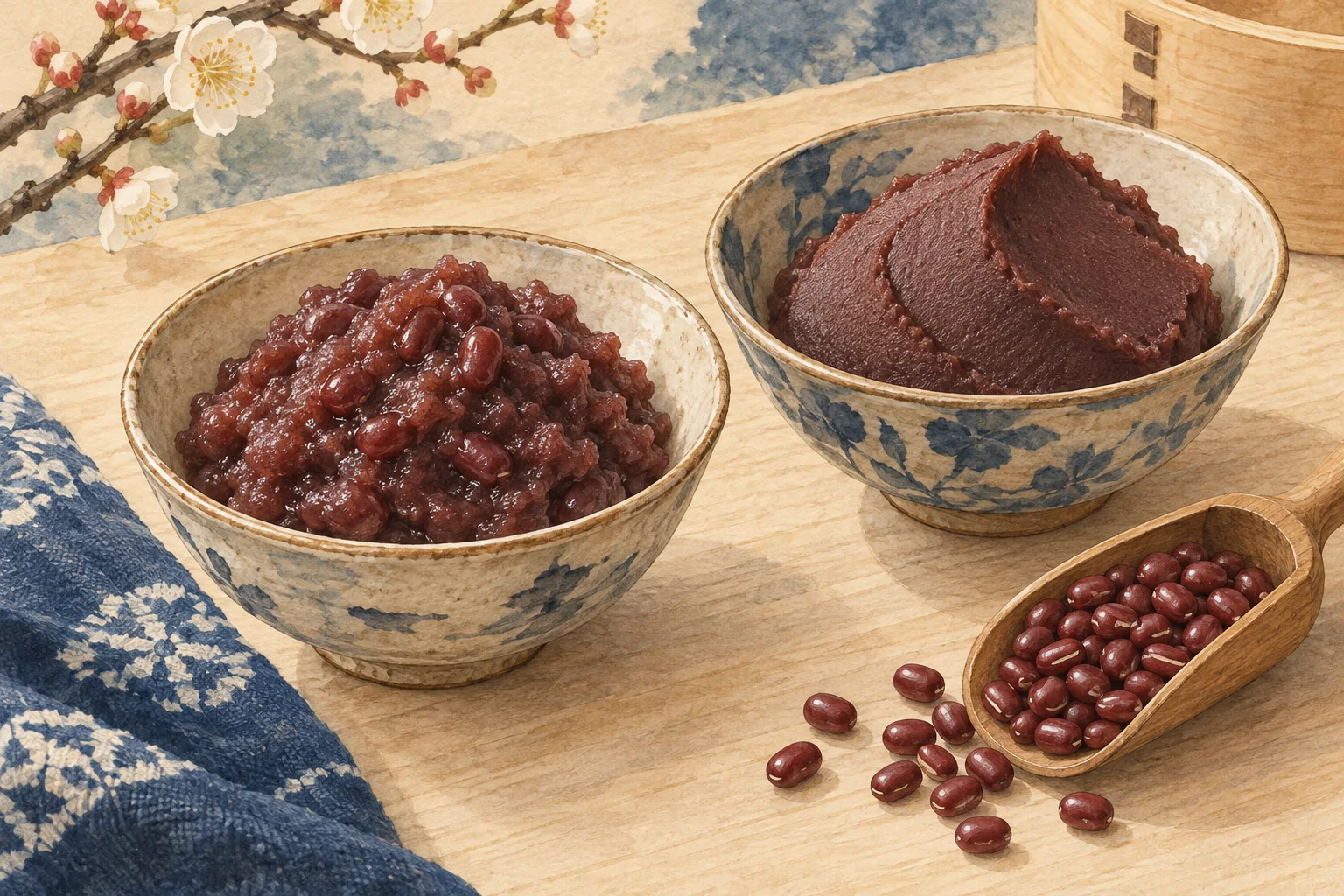
There are two main styles. Koshian is strained smooth, with the skins removed, and it is the more refined version used in formal tea sweets. Tsubuan keeps the whole beans and has more texture, and many people are firmly loyal to one or the other.
The idea of beans as a dessert is the obstacle for most newcomers, though it is worth noting that sweetened beans appear in desserts across East Asia and that the objection is largely cultural habit rather than taste. If you want to try it fairly, start with something warm and freshly made, like a taiyaki from a stall, rather than a packaged sweet.
あんこあんこankosweet red bean paste
豆が甘い。外国人がいちばん戸惑う日本の味。
壱一言で言うとIn one line
あんこは甘く煮た小豆の餡で、多くの和菓子の中身になっています。
弐30秒で説明するIn 30 seconds
あんこは、小豆を砂糖と一緒に煮て、崩れて餡になるまで練ったものです。たい焼きからまんじゅうまで、多くの和菓子の中身になっています。豆が甘い菓子であることは、多くの訪日客を最初は戸惑わせます。種類は大きく、こしあんとつぶあんに分かれます。
参スピーチ・英作文As a short speech
あんこは甘い小豆の餡で、訪日客の意見をはっきり二つに分ける材料の一つです。小豆を砂糖と一緒に、崩れるまで煮ます。できあがったものが、たい焼き、どら焼き、まんじゅう、餅、茶に添える小さな菓子と、数多くの和菓子の中身になります。
大きく二つの種類があります。こしあんは皮を除いてなめらかに漉したもので、茶席の菓子に使われる上品なほうです。つぶあんは豆の形を残し、歯ごたえがあります。どちらかにきっぱり肩入れする人は多いものです。
豆が甘い菓子であることが、初めての人にとっての壁ですが、甘く煮た豆は東アジアの各地の菓子に見られ、この抵抗は主に、味そのものより文化の習慣によるものだと言えます。公平に試したいなら、包装された菓子ではなく、屋台のたい焼きのように、温かくて作りたてのものから始めてください。
こう聞かれたらQuestions people actually ask
QWhat is the difference between koshian and tsubuan?
AKoshian is strained to remove the skins and is smooth; tsubuan keeps the beans partly whole. Smooth paste is standard for formal tea sweets, and whole-bean is common in street food.
こしあんと粒あんは何が違うのですか。こしあんは皮を取り除いて漉したなめらかな餡、つぶあんは豆の形を残した餡です。茶席の菓子ではこしあんが基本で、屋台の菓子にはつぶあんがよく使われます。
QIs it very sweet?
AIt is sweet, but usually less so than Western confectionery, and it is eaten with bitter green tea, which is part of the design. Modern shops often make lighter versions than traditional recipes.
かなり甘いのですか。甘いのですが、西洋の菓子ほどではないことが多く、苦い緑茶とともに食べることが前提になっています。今の店では、昔の配合より甘さを抑えたものが多くなりました。
QAre there other kinds of bean paste?
AYes: shiroan made from white kidney or lima beans, used when a pale color is wanted, and paste made from chestnut or sweet potato in seasonal sweets.
小豆以外の餡もあるのですか。あります。白いんげん豆などから作る白あんは、淡い色にしたいときに使われます。栗やさつまいもを使った餡は、季節の菓子に用いられます。
誤解されやすいA common misunderstanding
MYTHJapanese sweets are all mild and barely sweet.日本の菓子はどれも甘さ控えめだ、と思われがちです。
FACTAnko is properly sweet; the impression comes from eating it with bitter tea, which balances it. A sweet eaten alone tastes much sweeter than the same sweet with tea.あんこはしっかり甘いものです。控えめという印象は、苦い茶と一緒に食べることで釣り合いが取れているためです。同じ菓子でも、茶なしで食べればずっと甘く感じられます。
そのまま使えるフレーズPhrases you can use
- It's sweet bean paste inside.中は甘い小豆の餡です。
- Do you prefer smooth or whole-bean?こしあんとつぶあん、どちらがお好みですか。
- Try it with green tea.緑茶と一緒にどうぞ。
- It's best fresh and warm.作りたての温かいものがいちばんです。
- Beans really are the dessert here.ここでは豆が甘い菓子になります。
豆知識Background
あんこは小豆を煮て砂糖を加え、練り上げて作ります。皮を除いて漉したこしあん、豆の粒を残したつぶあん、こしあんに蜜で煮た大粒の小豆を混ぜた小倉あんなど、呼び分けがあります。小豆の赤い色は厄を払うとされ、祝いごとや節目に赤飯やぼたもちとして供される背景になっています。白いんげん豆から作る白あんは、色を活かした上生菓子に使われます。和菓子が抹茶とともに供されるのは、苦みと甘みの釣り合いを取るためです。
出典日本文化ナビ(原田英語.com)「あんこを英語で説明する(anko)」https://www.haradaeigo.com/japanese-culture/en/anko
- 文
- 日本文化ナビ編集部(原田英語.com)— 英文・和訳・解説はすべて独自に作成
- イラスト
- 日本文化ナビ オリジナル
- 発行
- 原田英語.com https://www.haradaeigo.com/
- 印刷日
- 2026.10.17
© 2026 Harada Eigo (原田英語.com). Text and illustration: Japan Culture Navi.
ページはこちら